
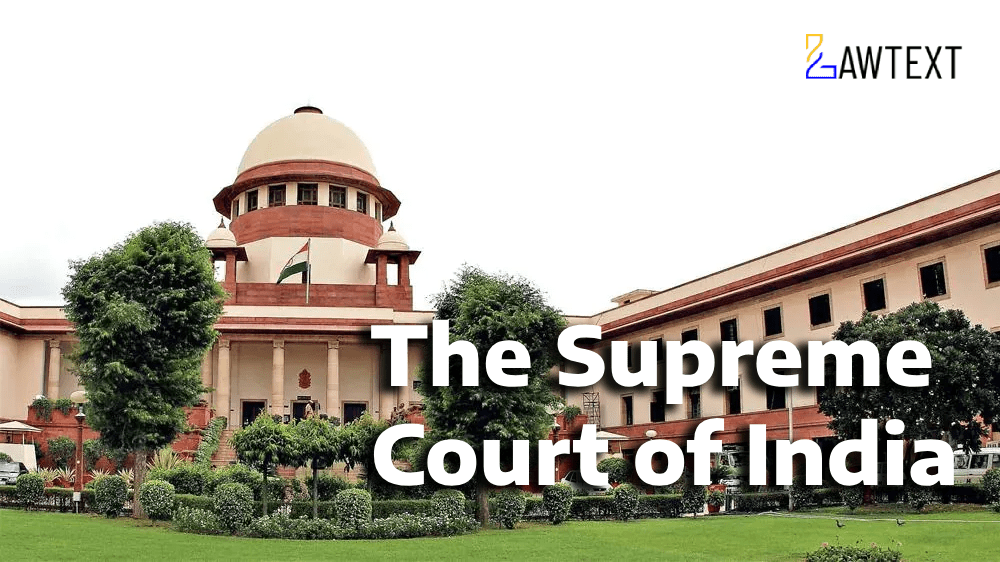
Supreme Court Upholds Arbitral Award in Commercial Contract Dispute — Joint and Several Liability of Holding Company and Subsidiary Upheld. Division Bench's restoration of award under Section 37 of Arbitration and Conciliation Act, 1996 affirmed, rejecting challenge on grounds of patent illegality and public policy.

  • 737
Judgement Image
Font size:
Print

Case Note & Summary

The case arises from a dispute between OPG Power Generation Private Limited (OPG) and its holding company Gita Power and Infrastructure Private Limited (Gita Power) on one side, and Enexio Power Cooling Solutions India Private Limited (Enexio) on the other, concerning a contract for design, supply, erection, and commissioning of an air-cooled condenser unit for a thermal power plant. The contract was awarded through a tender floated by OPG, but purchase orders were initially issued by Gita Power on 4 March 2013, later confirmed by OPG in July 2013. The total billed amount was Rs. 46,71,04,493, but only Rs. 39,59,19,629 was paid, leaving a balance of Rs. 6,75,15,631. OPG claimed deductions for liquidated damages (Rs. 3,30,00,000), customs duty (Rs. 5,94,06,693), and other costs, totaling Rs. 9,53,19,708, resulting in a net amount allegedly payable by Enexio. After failed settlement attempts, Enexio invoked arbitration under ICC Rules. The Arbitral Tribunal awarded Enexio Rs. 6,11,75,470 as outstanding principal, along with interest and costs, holding OPG and Gita Power jointly and severally liable. The tribunal rejected OPG's counterclaims for liquidated damages and customs duty. OPG and Gita Power challenged the award under Section 34 of the Arbitration and Conciliation Act, 1996 before a Single Judge of the Madras High Court, who set aside the award on grounds of patent illegality. Enexio appealed under Section 37, and a Division Bench restored the award. The Supreme Court, in the present appeals, considered whether the Division Bench correctly exercised its jurisdiction. The Supreme Court held that the Single Judge had exceeded its limited scope of review by re-appreciating evidence and substituting its own view. The court emphasized that an arbitral award can be set aside only if it is patently illegal or against public policy, and mere erroneous findings of fact do not warrant interference. The court upheld the Division Bench's restoration of the award, affirming the joint and several liability of the holding company, the interpretation of tax clauses, and the rejection of liquidated damages. The appeals were dismissed.

Headnote

A) Arbitration Law - Section 37 of Arbitration and Conciliation Act, 1996 - Appeal against order setting aside arbitral award - The Division Bench allowed the appeal and restored the arbitral award, holding that the Single Judge exceeded its jurisdiction by re-appreciating evidence and interfering with findings of fact. The Supreme Court affirmed, emphasizing the limited scope of interference under Section 37. (Paras 1-150)

B) Company Law - Joint and Several Liability - Single Economic Enterprise - The Arbitral Tribunal held that Gita Power (holding company) and OPG (subsidiary) were jointly and severally liable as they acted as a single economic enterprise. The Supreme Court upheld this finding, noting that Gita Power actively participated in negotiations and placed purchase orders. (Paras 13, 150)

C) Contract Law - Tax Reimbursement - Interpretation of Clause 6 of Purchase Orders - The Arbitral Tribunal interpreted Clause 6 to require reimbursement of all taxes including CVD and SAD, which are equivalent to excise duty. The Supreme Court upheld this interpretation as plausible and not patently illegal. (Paras 4-5, 150)

D) Contract Law - Liquidated Damages - Delay in Performance - The Arbitral Tribunal rejected the claim for liquidated damages as the delay was not solely attributable to the contractor and no loss was proved. The Supreme Court upheld this finding as a reasonable view of evidence. (Paras 6, 150)

E) Arbitration Law - Interest - Section 31(7)(b) of Arbitration and Conciliation Act, 1996 - The Arbitral Tribunal awarded interest at 10% per annum on the principal amount from the due date. The Supreme Court upheld this as within the tribunal's discretion. (Paras 12, 150)

Subscribe to unlock Headnote Subscribe Now

Issue of Consideration

Whether the Division Bench of the High Court erred in setting aside the Single Judge's order and restoring the arbitral award, particularly regarding the joint and several liability of the holding company and the interpretation of tax and liquidated damages clauses.

Subscribe to unlock Issue of Consideration Subscribe Now

Final Decision

The Supreme Court dismissed the appeals, upholding the Division Bench's judgment restoring the arbitral award. The court held that the Single Judge exceeded its jurisdiction under Section 34 by re-appreciating evidence, and the Division Bench rightly restored the award.

Law Points

  • Joint and several liability of holding company and subsidiary
  • Single economic enterprise doctrine
  • Scope of Section 37 of Arbitration and Conciliation Act
  • 1996
  • Interpretation of tax reimbursement clauses
  • Liquidated damages for delay
  • Customs duty liability
  • Interest on unpaid principal
Subscribe to unlock Law Points Subscribe Now

Case Details

2024 LawText (SC) (09) 322

Civil Appeal Nos. 3981-3982 of 2024 (Arising out of SLP (Civil) Nos.21017-21018 of 2021) and Civil Appeal Nos. 3983-3984 of 2024 (Arising out of SLP (Civil) Nos.21009-21010 of 2021)

2024-09-03

Manoj Misra, J.

2024 INSC 711

OPG Power Generation Private Limited and Gita Power and Infrastructure Private Limited

Enexio Power Cooling Solutions India Private Limited and Another

Subscribe to unlock Case Details (Citation, Judge, Date & more) Subscribe Now

Nature of Litigation

Appeals against a common judgment of the High Court under Section 37 of the Arbitration and Conciliation Act, 1996, restoring an arbitral award that had been set aside by a Single Judge.

Remedy Sought

The appellants (OPG and Gita Power) sought to set aside the Division Bench's order restoring the arbitral award, thereby challenging the award's validity.

Filing Reason

The appellants challenged the arbitral award on grounds of patent illegality and public policy, arguing that the tribunal erred in holding them jointly and severally liable and in interpreting contractual clauses.

Previous Decisions

The Single Judge of the Madras High Court set aside the arbitral award on 23 December 2020. The Division Bench, on 1 September 2021, allowed the appeals and restored the award.

Issues

Whether the Division Bench erred in restoring the arbitral award under Section 37 of the Arbitration and Conciliation Act, 1996. Whether the Arbitral Tribunal's finding of joint and several liability of the holding company and subsidiary was patently illegal. Whether the interpretation of tax reimbursement clauses (including CVD and SAD) by the tribunal was contrary to the contract. Whether the rejection of liquidated damages claim was perverse.

Submissions/Arguments

Appellants argued that the award suffered from patent illegality as the tribunal ignored contractual terms and imposed joint liability without basis. Respondent argued that the Division Bench correctly applied the limited scope of Section 37 and that the tribunal's findings were plausible and not open to interference.

Ratio Decidendi

Under Section 37 of the Arbitration and Conciliation Act, 1996, the appellate court's scope is limited to examining whether the trial court (under Section 34) exceeded its jurisdiction. An arbitral award cannot be set aside merely because a different view is possible; interference is warranted only if the award is patently illegal or against public policy. The finding of joint and several liability based on single economic enterprise is a plausible interpretation of facts and contract.

Judgment Excerpts

The Division Bench of the High Court allowed the appeals, set aside the judgment and order of the Single Judge dated 23 December 2020 and restored the arbitral award dated 13 July 2020. Gita Power and OPG are jointly and severally liable – Gita Power, being the holding company of OPG, had actively participated in the negotiations and had placed the purchase orders, which were later confirmed by OPG. In fact, they both acted as a single economic enterprise.

Procedural History

The dispute arose from a contract for supply and erection of an air-cooled condenser. Enexio invoked arbitration on 2 May 2019. The ICC Arbitral Tribunal delivered a unanimous award on 13 July 2020 in favor of Enexio. OPG and Gita Power challenged the award under Section 34 of the Arbitration and Conciliation Act, 1996 before a Single Judge of the Madras High Court, who set aside the award on 23 December 2020. Enexio appealed under Section 37, and a Division Bench restored the award on 1 September 2021. OPG and Gita Power then appealed to the Supreme Court, which dismissed the appeals on 3 September 2024.

Acts & Sections

  • Arbitration and Conciliation Act, 1996: Section 37, Section 34, Section 31(7)(b)
  • Commercial Courts Act, 2015: Section 13(1)
Subscribe to unlock full Legal Analysis Subscribe Now
Related Judgement
High Court High Court of Karnataka Quashes Complaint in NI Act Case Due to Lack of Proper Service of Demand Notice. Service of notice under Section 138 of Negotiable Instruments Act, 1881 must be proved by actual delivery or deemed service under Section 27 of G...
Related Judgement
High Court High Court of Karnataka Partly Allows Surety's Appeal Against Forfeiture of Bond Amount — Reduces Penalty from Rs.40,000 to Rs.5,000. Surety's inability to produce absconding accused does not warrant forfeiture of entire bond amount under Section 4...





