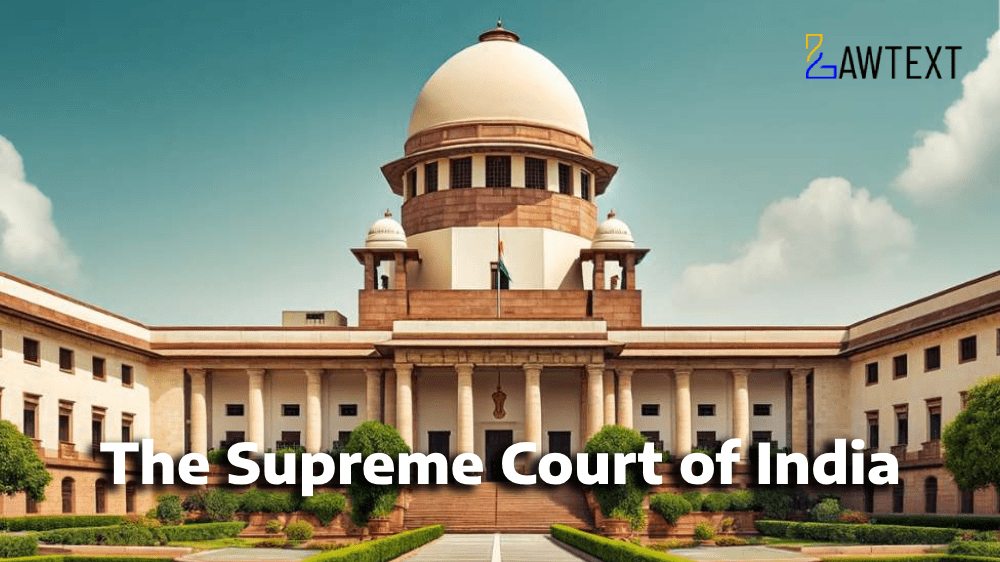
Supreme Court Allows Appeal in Excise Penalty Case — Substituted Rule Applies. The court determined that the substituted Rule 19 applies to pending proceedings, emphasizing the legislative intent to reduce penalties for better governance.

In Favour of Accused
  • 390
Judgement Image
Font size:
Print

Case Note & Summary

The dispute arose from the imposition of a penalty on the appellant, a sub-licensee under the M.P. Excise Act, 1915, for exceeding permissible limits of liquor loss during the license year 2009-10. The appellant contended that the penalty should be governed by the substituted Rule 19, which reduced the penalty amount, while the statutory authorities insisted on applying the old rule, resulting in a higher penalty. The High Court initially sided with the appellant, but the Division Bench reversed this decision, asserting that the old rule should apply as it was in effect during the license year. The Supreme Court examined the legislative intent behind the substitution of the rule and concluded that the new rule should apply to all pending proceedings, as it was designed to balance crime and punishment effectively. The court clarified that the substitution of a rule involves repealing the old rule and enacting a new one, thus the old rule could not be applied retroactively. The court ultimately allowed the appeal, setting aside the Division Bench's judgment and confirming that the penalty should be calculated under the substituted Rule 19, effective from its date of enactment, with no costs awarded.

Headnote

A) Administrative Law - Substitution of Rules - Applicability of Substituted Rule - M.P. Excise Act, 1915, Section 62 - The court held that the substituted Rule 19 applies to pending proceedings, as it was intended to reduce penalties for better governance. The distinction between supersession and substitution was emphasized, confirming that the old rule ceased to exist upon substitution (Paras 2-34).

Subscribe to unlock Headnote Subscribe Now

Issue of Consideration

Applicability of the relevant rule for imposition of penalty during the license period of 2009-10 versus the substituted rule in 2011

Subscribe to unlock Issue of Consideration Subscribe Now

Final Decision

The Supreme Court allowed the appeal, set aside the Division Bench's judgment, and confirmed that the penalty should be calculated under the substituted Rule 19, effective from its date of enactment.

Law Points

  • Substitution of rules
  • retrospective application
  • penalty imposition
  • legislative intent
  • statutory interpretation
Subscribe to unlock Law Points Subscribe Now

Case Details

2024 LawText (SC) (4) 192

Civil Appeal Nos. 5062-5099 of 2024

2024-04-19

Pamidighantam Sri Narasimha, Aravind Kumar

2024 INSC 327

Pratap Venugopal, Saurabh Mishra

Pernod Ricard India (P) Ltd.

The State of Madhya Pradesh & Ors.

Subscribe to unlock Case Details (Citation, Judge, Date & more) Subscribe Now

Nature of Litigation

Appeal against the imposition of penalty under excise rules

Remedy Sought

Appellant sought application of the substituted rule for penalty calculation

Filing Reason

Dispute over the applicable rule for penalty during the license period

Previous Decisions

High Court initially ruled in favor of the appellant, later reversed by Division Bench

Issues

Whether the substituted rule applies to pending proceedings Whether the old rule can be applied retrospectively

Submissions/Arguments

Appellant argued for the application of the substituted rule, asserting the old rule was repealed. State argued that the old rule should apply as it was in effect during the license year.

Ratio Decidendi

The substitution of a rule involves repealing the old rule and enacting a new one, which applies to all pending proceedings, thus preventing arbitrary classification of offenders.

Judgment Excerpts

The purpose of the amendment is to achieve a proper balance between crime and punishment. The substituted Rule alone will apply to pending proceedings.

Procedural History

The appellant's penalty was confirmed by the Deputy Commissioner, upheld by the Excise Commissioner and Revenue Board, leading to a writ petition in the High Court, which was reversed by the Division Bench.

Acts & Sections

  • M.P. Excise Act, 1915: Section 62, Section 63
  • Madhya Pradesh General Clauses Act, 1957: Section 10, Section 31
Subscribe to unlock full Legal Analysis Subscribe Now
Related Judgement
High Court High Court of Karnataka Allows Appeal by Complainant Mother Against Acquittal in POCSO Case — Trial Court Erred in Disbelieving Victim's Testimony; Conviction Restored Under Sections 363, 376, 506 IPC and Section 6 of POCSO Act. The court held that...
Related Judgement
High Court Madras High Court Dismisses Second Appeal in Succession Dispute — Concurrent Findings of Fact Not Interfered With. Court holds that plaintiffs failed to prove they are legal heirs of deceased Perumal Naidu and that the third defendant's claim as so...