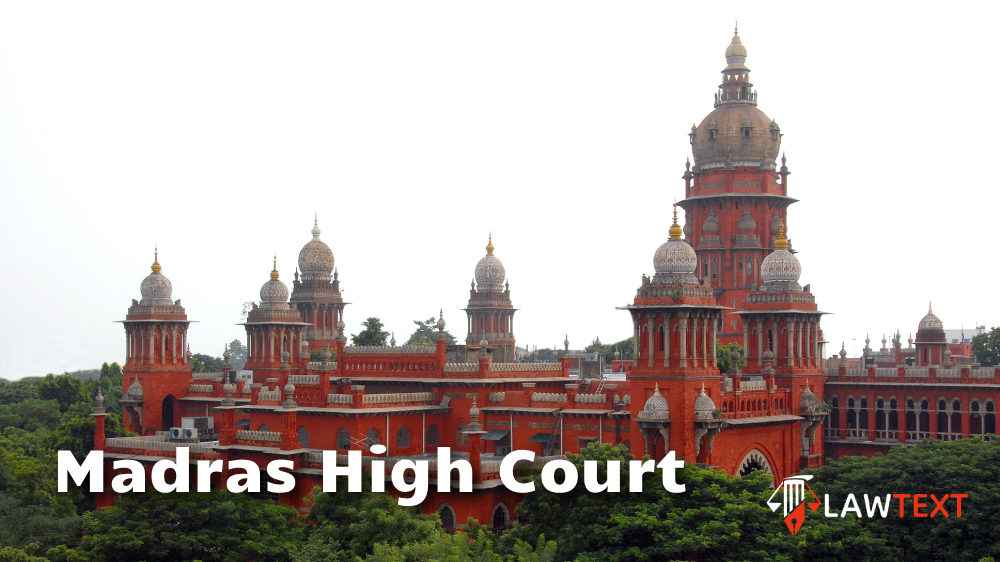
Case Note & Summary
The matter involved a challenge under Section 34 of the Arbitration and Conciliation Act, 1996 to a majority arbitral award dated 22nd May 2020 arising from a construction contract. The National Thermal Power Corporation had proposed a Super Thermal Power Plant and engaged Konkan Railway Corporation Ltd. (the petitioner) as Project Management Consultant. The petitioner in turn issued a tender for coal transportation system works. The respondent, M/s. SRCC Company Infra Private Ltd., emerged as the L1 bidder and was issued a Letter of Acceptance on 16th May 2017 for the work valued at Rs. 122,32,98,483/-, with a contract agreement executed on 5th December 2017. During execution, the Collector’s office, Madhya Pradesh, demanded royalty charges at Rs. 100/- per cubic meter for earth used in embankment, aggregating approximately Rs. 22 crore. The respondent invoked arbitration, and a three-member arbitral tribunal was constituted. The majority award held the petitioner liable to pay the royalty and directed the petitioner to modify the contract under Section 26 of the Specific Relief Act, 1963 and Section 20 of the Indian Contract Act, 1872 to reflect the correct consensus ad idem. The dissenting presiding arbitrator directed the respondent to pay the royalty. The petitioner challenged the award on the ground that the tribunal, being a creature of the contract, exceeded its jurisdiction by ignoring clear contractual terms that imposed royalty liability on the contractor as per Clauses 14.2, 37, 57 of the tender conditions and the Schedule of Items. The petitioner relied upon the Supreme Court decision in Union of India v. Bharat Enterprise and contended that the direction to amend the contract was without authority. The respondent supported the award, though its specific submissions are not captured in the extracted portion. The court heard extensive arguments from senior counsel on both sides and reserved judgment on 12th June 2025, pronouncing it on 14th November 2025. The judgment addressed the core issue of whether the majority award suffered from patent illegality or was otherwise liable to be set aside under the narrow scope of Section 34 of the Act.
Headnote
A) Arbitration – Section 34 Challenge – Liability for Royalty – Arbitration and Conciliation Act, 1996, Section 34 – The majority arbitral award held the petitioner liable for royalty on ordinary earth used in embankment and directed payment; the dissenting arbitrator held the respondent liable. The petitioner contended that the contractual terms (Clauses 14.2, 37, 57 of the tender conditions, etc.) place royalty liability on the contractor, and the tribunal exceeded its contractually circumscribed jurisdiction. The High Court examined the contract terms and the scope of interference under Section 34. (Paras 1-4) B) Contract Law – Modification of Contract by Arbitral Tribunal – Powers under Specific Relief Act, 1963, Section 26 and Indian Contract Act, 1872, Section 20 – The arbitral majority directed the petitioner to modify the contract to reflect the true consensus ad idem, invoking specific relief and contract law provisions. The petitioner argued this was beyond the tribunal’s authority. The High Court assessed whether such direction was permissible in law. (Paras 3-4, 11)
Issue of Consideration
Whether the majority arbitral award holding the petitioner liable to pay royalty on ordinary earth used in the subject work and directing modification of the contract is liable to be set aside under Section 34 of the Arbitration and Conciliation Act, 1996
Law Points
- Arbitral tribunal is a creature of contract and cannot traverse beyond its terms
- strict construction of contract under Arbitration and Conciliation Act
- 1996
- interpretation of royalty liability clauses in construction contracts
- Specific Relief Act
- 1963 Section 26 and Indian Contract Act
- 1872 Section 20 invoked for contract modification