
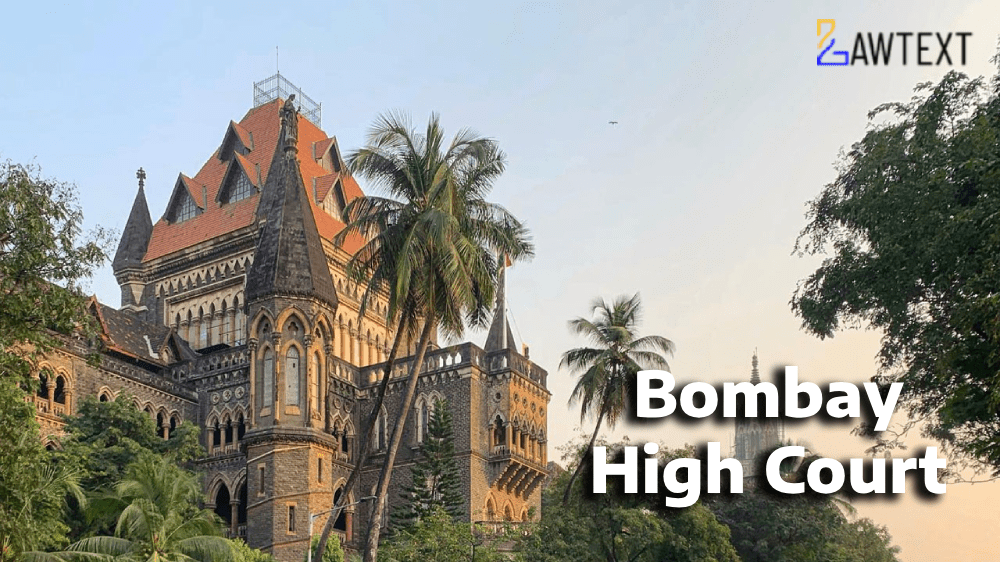
Bombay High Court Rejects Application for Amendment of Preliminary Decree in Partition Suit — No Accidental Slip or Clerical Error Found. Claim Based on Sale Deed Not Raised During Trial or Appeals Cannot Be Introduced via Section 152 CPC Amendment.

High Court: Bombay High Court
  • 574
Judgement Image
Font size:
Print

Case Note & Summary

The case arises from a partition suit filed by Anantrai against his brothers and others for partition of properties left by their father Ramshankar Upadhyay. The Trial Court decreed the suit granting 1/5th share to each of the five sons: Anantrai (plaintiff), Arvind, Vasant, Sharad, and Girish (defendant No.4). The decree was confirmed by the First Appellate Court, the High Court in Second Appeal, and the Supreme Court. Subsequently, Girish filed an application under Section 152 CPC before the Trial Court seeking amendment of the preliminary decree to reflect that Arvind's 1/5th share in suit property No.3 should be transferred to Girish, based on a sale deed dated 17.01.2000 executed by Arvind and his family in favour of Girish and Chirag (as partners of Everest Bakery). The Trial Court rejected the application, and the High Court dismissed the challenge. Girish then filed a review petition and the present application before the High Court. The High Court, relying on the Supreme Court's decision in B. Boraiah v. M.G. Thirthaprasad, held that since the Second Appeal was decided on merits, the Trial Court lacked jurisdiction, but the High Court could entertain the application. However, on merits, the court found that the claim was not based on an accidental slip or clerical error; the sale deed was never pleaded or considered during trial, and the issue of Arvind's share being transferred to Girish was not raised at any stage. Moreover, the property was purchased by Girish and Chirag as partners of Everest Bakery, and Girish alone could not claim the share without accounting for the partnership. The court rejected the application, holding that Section 152 CPC cannot be used to introduce new claims or correct alleged omissions that were never part of the proceedings.

Headnote

A) Civil Procedure Code - Amendment of Decree - Section 152 CPC - Accidental Slip - The court held that the power under Section 152 CPC is limited to correcting accidental slips or clerical/arithmetical mistakes, not to introduce new claims based on events not pleaded or considered during trial. The application seeking to transfer 1/5th share from one co-sharer to another based on a sale deed executed during pendency of suit was rejected as it did not fall within the scope of Section 152 CPC (Paras 14-18).

B) Civil Procedure Code - Jurisdiction - Section 153A CPC - Correction of Decree After Appeal - Following the Supreme Court's decision in B. Boraiah v. M.G. Thirthaprasad, the court held that where the High Court has decided the appeal on merits (not dismissed under Order XLI Rule 11 CPC), the Trial Court has no jurisdiction to entertain an application for correction of the decree; the High Court itself has jurisdiction. However, the application was still rejected on merits (Paras 10-13).

C) Partnership Law - Property of Firm - Sale Deed in Favour of Partners - The court noted that the sale deed was executed in favour of Girish and Chirag as partners of Everest Bakery, and the property belonged to the partnership firm. Girish alone could not claim the share without accounting for the firm's dissolution or distribution of assets (Para 17).

Subscribe to unlock Headnote Subscribe Now

Issue of Consideration

Whether the High Court can amend a preliminary decree under Section 152 CPC to reflect a sale deed that was not pleaded or considered during trial, and whether the Trial Court had jurisdiction to entertain such application after the decree was confirmed on merits by the High Court.

Subscribe to unlock Issue of Consideration Subscribe Now

Final Decision

The application is rejected. The court held that the claim does not fall within the scope of Section 152 CPC as there is no accidental slip or clerical error; the sale deed was never pleaded or considered, and the property was purchased by partners of a firm, so Girish alone cannot claim the share.

Law Points

  • Section 152 CPC
  • Section 153A CPC
  • accidental slip
  • correction of decree
  • jurisdiction of trial court after appeal decided on merits
  • partition decree
  • sale deed effect
  • partnership property
Subscribe to unlock Law Points Subscribe Now

Case Details

2024 LawText (BOM) (8) 202

Civil Application No. 250/2022 in Second Appeal No. 171/2018

2024-08-20

Anil L. Pansare, J.

2024:BHC-NAG:9226

M. G. Bhangde, Senior Advocate assisted by Shajal S. Sarda for appellant; R.D. Hajare for respondent Nos. 1A to 1F and 2 to 9; K. M. Joshi for respondent Nos. 1, 2(a), 4, 6, 8, 9 and 4A to 4F in M.C.A. No.122/2022

Girish Ramshankar Upadhyay and Ors.

Anantrai Girishbhai Upadhyay (Dead thr. LRs.) Rama wd/o Anantrai Upadhyay and Ors.

Subscribe to unlock Case Details (Citation, Judge, Date & more) Subscribe Now

Nature of Litigation

Application under Section 152 CPC for amendment of preliminary decree in a partition suit.

Remedy Sought

Applicants (original defendants) sought amendment of preliminary decree to transfer 1/5th share of Arvind in suit property No.3 to Girish based on a sale deed executed during pendency of suit.

Filing Reason

Applicants claimed that the preliminary decree did not reflect the sale deed by which Arvind sold his share to Girish, and sought correction as an accidental slip.

Previous Decisions

Trial Court decreed suit granting 1/5th share to each of five sons; decree confirmed by First Appellate Court, High Court in Second Appeal, and Supreme Court. Trial Court rejected application for amendment; High Court dismissed challenge; review petition pending.

Issues

Whether the High Court has jurisdiction to entertain an application for correction of decree under Section 152 CPC when the decree was confirmed on merits by the High Court in second appeal? Whether the claim based on a sale deed not pleaded or considered during trial can be introduced via Section 152 CPC as an accidental slip?

Submissions/Arguments

Applicants argued that under Section 153A CPC and the Supreme Court's decision in B. Boraiah, the High Court has jurisdiction to correct the decree, and the Trial Court's order rejecting the application is non est. Applicants relied on S. Satnam Singh to argue that courts can rectify mistakes and consider subsequent events for complete adjudication. Respondents opposed, contending that the issue was never raised and the sale deed was not part of the pleadings; the application is an attempt to reopen a concluded decree.

Ratio Decidendi

The power under Section 152 CPC is limited to correcting accidental slips or clerical/arithmetical mistakes and cannot be used to introduce new claims or rectify omissions that were never part of the proceedings. Where a decree has been confirmed on merits by the appellate court, the trial court lacks jurisdiction to amend it, but the appellate court may entertain the application; however, the application must still satisfy the requirements of Section 152 CPC.

Judgment Excerpts

The Supreme Court has, in clear terms, held that where the High Court has decided the appeal after due consideration of all aspects on merit and not rejected the appeal under Rule 11 Order XLI of the CPC, the Trial Court has no jurisdiction to entertain the application for correction of the decree passed by the High Court in the first appeal and thus, the High Court will have jurisdiction to entertain the said application. This is not a case of accidental slip or correction of clerical or arithmetical mistake in the judgment and decree. The decree, thus, cannot be amended as prayed for.

Procedural History

Original suit (Special Civil Suit No. 29/1996) decreed on 13.10.2003 granting 1/5th share to each of five sons. Decree confirmed by First Appellate Court, High Court in Second Appeal No. 171/2018, and Supreme Court. Applicants filed application under Section 152 CPC before Trial Court, which was rejected. The order was challenged before High Court but dismissed. Applicants filed review petition (Misc. Civil Application (Review) No.345/2022) pending. Present application filed before High Court under Section 152 CPC read with Section 153A CPC.

Acts & Sections

  • Code of Civil Procedure, 1908 (CPC): 152, 153A
Subscribe to unlock full Legal Analysis Subscribe Now
Related Judgement
Supreme Court Supreme Court Institutionalizes Central Empowered Committee as Permanent Statutory Body Under Environment (Protection) Act, 1986. The Court approved a notification constituting the CEC for monitoring compliance of environmental orders and directed th...
Related Judgement
Supreme Court Supreme Court Acquits Accused in Robbery Case Due to Unreliable Disclosure Statement and Lack of Corroborative Evidence. Conviction under Sections 392 and 397 IPC Set Aside as Recovery of Common Articles and Hostile Witnesses Failed to Establish Guil...





