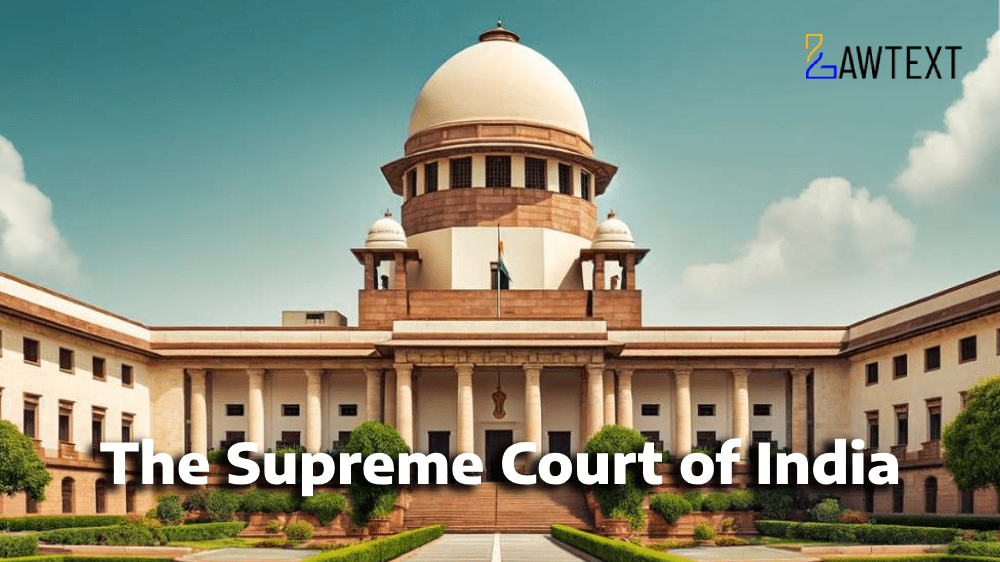
Supreme Court Dismisses Writ Petition Seeking Supreme Court Sittings in Indore — Jurisdictional Limits of High Court Under Article 226 Affirmed.

In Favour of Accused
  • 7
Judgement Image
Font size:
Print

Case Note & Summary

The case arose from a writ petition filed by the respondents in the High Court of Madhya Pradesh, seeking to direct the Chief Justice of India to appoint Indore as a location for Supreme Court sittings. The petitioners argued that the absence of such sittings violated their rights under Article 32 of the Constitution, claiming discrimination against residents of Indore compared to those in New Delhi. The High Court initially issued notice to the respondents, prompting the appellants to appeal against this order. The Attorney General contended that the writ petition was not maintainable as the High Court lacked jurisdiction to direct the Chief Justice regarding the Supreme Court's location. The petitioners countered that the High Court had the discretion to issue notice and that their petition raised triable issues regarding Article 130's interpretation. The Supreme Court analyzed the nature of the High Court's jurisdiction under Article 226, emphasizing that it should dismiss frivolous petitions at the preliminary stage. The Court referenced previous judgments to clarify that a writ petition could only be entertained if it raised arguable issues. Ultimately, the Supreme Court found that the petition did not present a triable issue and that the High Court had erred in issuing notice. The appeal was allowed, the High Court's order was set aside, and the writ petition was dismissed without costs.

Headnote

A) Constitutional Law - Jurisdiction of High Court - Maintainability of Writ Petition - Article 226 of the Constitution - The High Court cannot direct the Chief Justice of India regarding the location of Supreme Court sittings as it falls within the discretionary power of the Chief Justice under Article 130. The petitioners' claim that the absence of sittings at Indore is unconstitutional was found to lack merit, leading to the dismissal of the writ petition. Held that the High Court erred in issuing notice on the writ petition (Paras 1-7).

Subscribe to unlock Headnote Subscribe Now

Issue of Consideration

Whether the High Court could direct the Chief Justice of India regarding the location of Supreme Court sittings.

Subscribe to unlock Issue of Consideration Subscribe Now

Final Decision

The Supreme Court allowed the appeal, set aside the High Court's order dated April 13, 1998, and dismissed the writ petition filed by the petitioners.

Law Points

  • Article 130
  • Article 226
  • discretionary power
  • maintainability of writ petition
  • justiciability
  • policy decision
Subscribe to unlock Law Points Subscribe Now

Case Details

1998 LawText (SC) (08) 55

Writ Petition No. 500 of 1998

1998-08-07

S.C. Agarwal, A.S. Anand, S. Saghir Ahmad

Union of India & Anr.

S.P. Anand & Ors.

Subscribe to unlock Case Details (Citation, Judge, Date & more) Subscribe Now

Nature of Litigation

Writ petition seeking direction for Supreme Court sittings in Indore.

Remedy Sought

Direction to appoint Indore as a location for Supreme Court sittings.

Filing Reason

Claim of discrimination and violation of rights under Article 32.

Previous Decisions

High Court issued notice on the writ petition.

Issues

Whether the High Court could direct the Chief Justice of India regarding the location of Supreme Court sittings. Whether the writ petition raised triable issues.

Submissions/Arguments

The Attorney General argued that the writ petition was not maintainable and the High Court lacked jurisdiction. The petitioners contended that the High Court had the discretion to issue notice and that their petition raised triable issues.

Ratio Decidendi

The High Court cannot direct the Chief Justice of India regarding the location of Supreme Court sittings as this is a discretionary power under Article 130 of the Constitution. A writ petition must raise triable issues to be entertained; otherwise, it can be dismissed in limine.

Judgment Excerpts

The High Court cannot direct the Chief Justice of India regarding the location of Supreme Court sittings as it falls within the discretionary power of the Chief Justice under Article 130. The relief sought by the petitioners in the Writ Petition filed by the petitioners in the High Court could not be granted by the High Court in exercise of its jurisdiction under Article 226.

Procedural History

The writ petition was filed in the High Court of Madhya Pradesh, which issued notice to the respondents. The appellants appealed against this order, leading to the Supreme Court's review.

Acts & Sections

  • Constitution of India: Article 130, Article 226, Article 32
Subscribe to unlock full Legal Analysis Subscribe Now
Related Judgement
High Court Bombay High Court Allows Appeal by Public Trust in Property Dispute — Civil Court Jurisdiction Not Barred Under Sections 79 and 80 of Bombay Public Trust Act. Suit for Declaration of Ownership and Recovery of Possession by Trust Against Third Parti...
Related Judgement
Supreme Court Supreme Court Dismisses Bank's Appeal in SARFAESI Act Case Due to Procedural Non-Compliance. The court found that the appellant bank failed to adhere to the requirements under Section 13(2) of the Securitisation and Reconstruction of Financial Assets...