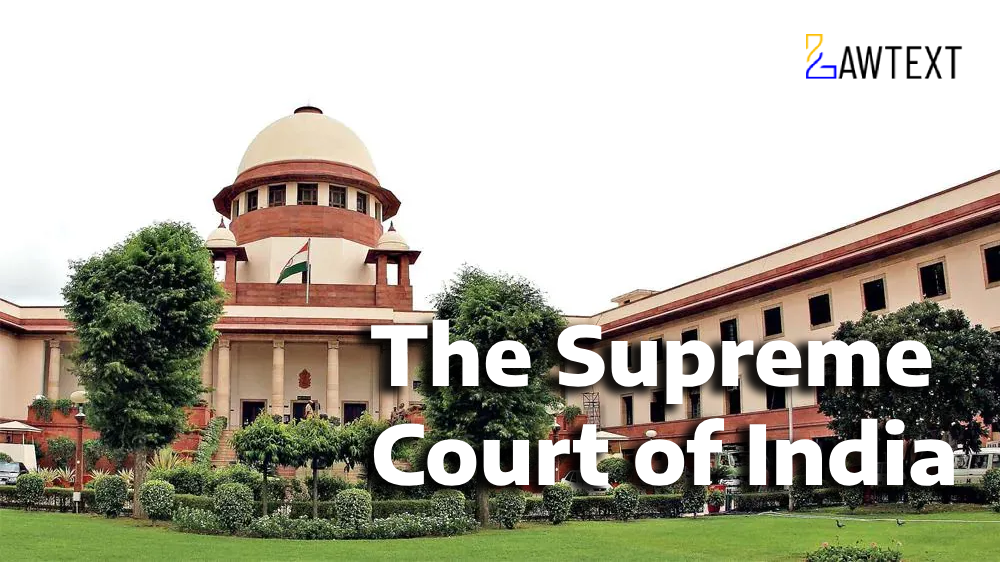
Supreme Court Declares IMDT Act Unconstitutional — Upholds Application of Foreigners Act in Assam.

In Favour of Prosecution
  • 1
Judgement Image
Font size:
Print

Case Note & Summary

The writ petition was filed under Article 32 of the Constitution of India by Sarbananda Sonowal, a citizen of India and former President of the All Assam Students Union, seeking to declare certain provisions of the Illegal Migrants (Determination by Tribunals) Act, 1983 as unconstitutional. The petitioner argued that the IMDT Act was arbitrary and discriminatory, making it difficult for Indian citizens in Assam to challenge the presence of illegal migrants. The petition highlighted the failure of the IMDT Act to effectively detect and deport illegal migrants, particularly those who entered Assam after March 25, 1971, and pointed out the adverse demographic changes in the state due to illegal migration. The Assam Accord of 1985, which aimed to address these issues, was referenced, indicating that the government had committed to detecting and deporting illegal migrants. The Union of India and the State of Assam filed counter affidavits acknowledging the need for a uniform approach to illegal migration and the inadequacies of the IMDT Act. The court analyzed the constitutional validity of the IMDT Act, considering the implications of illegal migration on national security and the demographic composition of Assam. Ultimately, the court held that the IMDT Act was unconstitutional and that the Foreigners Act, 1946 should apply uniformly across India, including Assam, to effectively address the issue of illegal migration.

Headnote

A) Constitutional Law - Ultra Vires Legislation - IMDT Act declared unconstitutional - Illegal Migrants (Determination by Tribunals) Act, 1983 - The court held that the IMDT Act was arbitrary and discriminatory, failing to effectively address illegal migration, thus violating the Constitution. The application of the Foreigners Act, 1946 was deemed necessary for uniformity across India (Paras 1-12).

Subscribe to unlock Headnote Subscribe Now

Issue of Consideration

Whether the provisions of the Illegal Migrants (Determination by Tribunals) Act, 1983 are unconstitutional and whether the Foreigners Act, 1946 should apply to Assam.

Subscribe to unlock Issue of Consideration Subscribe Now

Final Decision

The Supreme Court declared the Illegal Migrants (Determination by Tribunals) Act, 1983 unconstitutional and upheld the application of the Foreigners Act, 1946 in Assam, emphasizing the need for effective measures against illegal migration.

Law Points

  • Public Interest Litigation
  • Ultra Vires
  • Discrimination
  • Constitutional Validity
  • Illegal Migration
Subscribe to unlock Law Points Subscribe Now

Case Details

2005 LawText (SC) (07) 23

Writ Petition (civil) 131 of 2000

2005-07-12

G.P. Mathur, R.C. Lahoti, P.K. Balasubramanyan

Sarbananda Sonowal

Union of India & Anr.

Subscribe to unlock Case Details (Citation, Judge, Date & more) Subscribe Now

Nature of Litigation

Public interest litigation challenging the constitutionality of the IMDT Act.

Remedy Sought

Petitioner sought declaration of the IMDT Act as unconstitutional and application of the Foreigners Act in Assam.

Filing Reason

Petitioner claimed that the IMDT Act was arbitrary and discriminatory against Indian citizens.

Issues

Constitutionality of the IMDT Act Application of the Foreigners Act in Assam

Submissions/Arguments

Petitioner argued that the IMDT Act failed to effectively address illegal migration and discriminated against Indian citizens. Respondents acknowledged the need for a uniform approach to illegal migration and the inadequacies of the IMDT Act.

Ratio Decidendi

The IMDT Act was found to be arbitrary and discriminatory, failing to provide effective mechanisms for the detection and deportation of illegal migrants, thus violating constitutional principles of equality and justice.

Judgment Excerpts

The IMDT Act was arbitrary and discriminatory, failing to effectively address illegal migration. The application of the Foreigners Act, 1946 was deemed necessary for uniformity across India.

Procedural History

The writ petition was filed in 2000, with subsequent counter affidavits filed by the Union of India and the State of Assam, leading to the Supreme Court's judgment in 2005.

Acts & Sections

  • Illegal Migrants (Determination by Tribunals) Act, 1983:
  • Foreigners Act, 1946:
  • Citizenship Act, 1955: Section 6A
Subscribe to unlock full Legal Analysis Subscribe Now
Related Judgement
Supreme Court Supreme Court Quashes High Court Orders Transferring Land Grabbing Cases Due to Jurisdictional Overreach and Violation of Interim Stay. High Court's Transfer of 864 Cases in Disposed Matter Through 'Special Mentioning' Held Without Jurisdiction and C...
Related Judgement
High Court High Court Dismisses Writ Petition Challenging Termination of Employment in Educational Institution — Validity of Appointment Under Scrutiny.