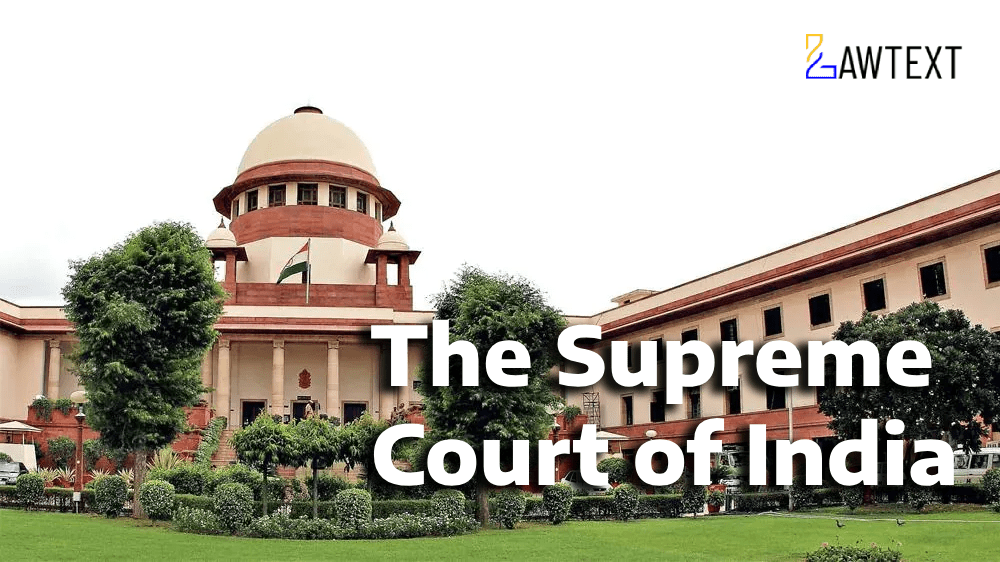
Case Note & Summary
The dispute arose from a claim for compensation following the death of Bangaru Raju in a tractor accident. The claimants filed a petition under the Workmen’s Compensation Act, 1923 against the owner of the tractor and its insurer, National Insurance Co. Ltd. The owner contended that she was not liable as she and her husband had been living separately prior to the accident. The Commissioner for Workmen’s Compensation awarded compensation based on a calculation of the deceased's salary. However, the High Court later held that no award could be passed against the insurer under the Workmen’s Compensation Act. The appellants argued that Section 167 of the Motor Vehicles Act allowed for claims against the insurer, while the respondents contended that the 1988 Act provided a complete code for motor vehicle accidents, mandating compulsory insurance and limiting the insurer's liability. The Supreme Court analyzed the provisions of both Acts, emphasizing the doctrine of election, which precludes a claimant from pursuing claims under both Acts simultaneously. The court concluded that the relationship of employer and employee was not established, and thus the appeal was dismissed, affirming the High Court's judgment.
Headnote
A) Motor Vehicles Act - Insurer's Liability - Interpretation of Section 167 - Motor Vehicles Act, 1988, Section 167 - The court held that a claimant has the option to claim compensation under either the Motor Vehicles Act or the Workmen’s Compensation Act, but not both. The insurer's liability is limited under the provisions of the 1988 Act, and the relationship of employer and employee must be established for a claim under the 1923 Act (Paras 1-6).
Issue of Consideration
Whether an award could be passed against the insurer in proceedings under the Workmen’s Compensation Act, 1923.
Final Decision
The Supreme Court dismissed the appeal, upholding the High Court's judgment that no award could be passed against the insurer under the Workmen’s Compensation Act.
Law Points
- Interpretation of Section 167
- Motor Vehicles Act
- 1988
- Workmen's Compensation Act
- 1923
- doctrine of election
- liability of insurer
- employer-employee relationship
Case Details
2007 LawText (SC) (02) 420
Appeal (civil) 856 of 2007
S.B. Sinha, Markandey Katju
Mr. Venkateswara Rao Anumolu, Mr. Kishore Rawat
Gottumukkala Appala Narasimha Raju & Ors
National Insurance Co. Ltd. & Anr
Subscribe to unlock Case Details (Citation, Judge, Date & more)
Subscribe Now
Nature of Litigation
Claim for compensation under Workmen’s Compensation Act following a fatal accident.
Remedy Sought
Claimants sought compensation from the insurer and owner of the tractor.
Filing Reason
Accident resulting in the death of Bangaru Raju while driving the tractor.
Previous Decisions
High Court held that no award could be passed against the insurer under the Workmen’s Compensation Act.
Issues
Whether an award could be passed against the insurer in proceedings under the Workmen’s Compensation Act.
Whether the relationship of employer and employee existed between the deceased and the owner of the tractor.
Submissions/Arguments
Appellants argued that Section 167 of the Motor Vehicles Act allowed claims against the insurer.
Respondents contended that the 1988 Act provided a complete code and limited the insurer's liability.
Ratio Decidendi
The court held that the provisions of the Motor Vehicles Act and the Workmen’s Compensation Act are distinct, and a claimant must elect to pursue a claim under one or the other, not both. The relationship of employer and employee must be established for a claim under the Workmen’s Compensation Act.
Judgment Excerpts
Section 167 of the 1988 Act statutorily provides for an option to the claimant stating that where the death of or bodily injury to any person gives rise to a claim for compensation under the 1988 Act as also the 1923 Act, the person entitled to compensation may without prejudice to the provisions of Chapter X claim such compensation under either of those Acts but not under both.
It is wholly absurd to suggest that the husband would be a 'workman' of his wife in absence of any specific contract.
Procedural History
The appeal arose from a judgment and order dated 23/7/2003 passed by the High Court of Judicature Andhra Pradesh at Hyderabad in Appeal Against Order No.2720 of 2003.
Acts & Sections
- Motor Vehicles Act, 1988: Section 143, Section 147, Section 167
- Workmen's Compensation Act, 1923: Section 2(n), Section 19(1)