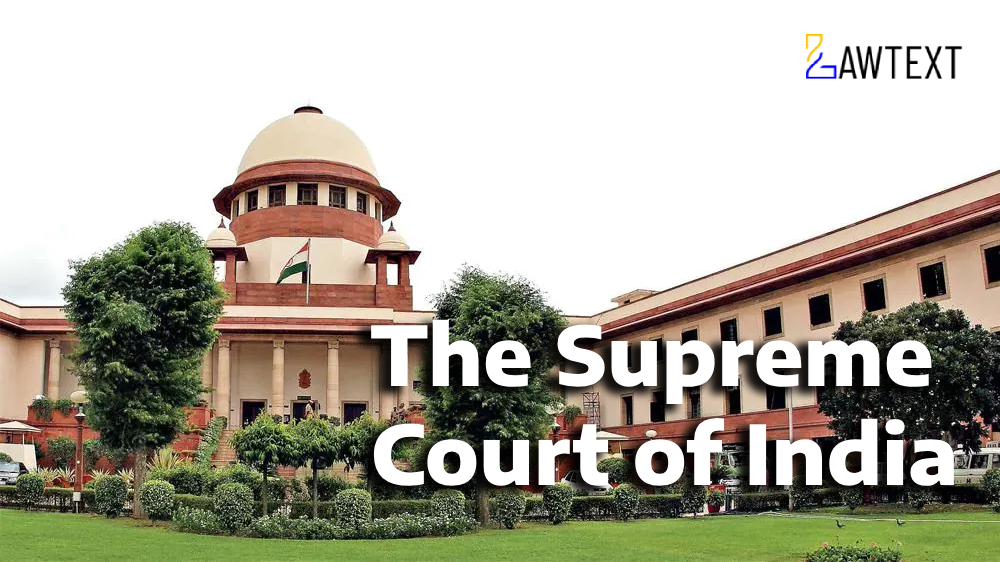
Supreme Court Dismisses Appeal Against Acquittal in Dowry Death Case — Insufficient Evidence Found. The High Court's acquittal was upheld as the prosecution failed to establish a conclusive chain of circumstantial evidence linking the accused to the crime under Sections 302 and 304B of the Indian Penal Code, 1860.

In Favour of Accused
  • 2
Judgement Image
Font size:
Print

Case Note & Summary

The case involved an appeal by the State of Madhya Pradesh challenging the acquittal of Sanjay Rai, who was initially convicted for the murder of his wife, Anita Bai, under Section 302 of the Indian Penal Code, 1860. The trial court sentenced him to life imprisonment, citing evidence of cruelty related to dowry demands. Anita Bai was found dead in her home shortly after her marriage, and the accused reported the incident to the police. The prosecution's case relied heavily on circumstantial evidence, which the High Court later deemed insufficient to establish guilt. The High Court noted that there was no direct evidence linking the accused to the crime, and the alleged motive of dowry was not substantiated. The court emphasized that the circumstances presented did not form a complete chain of evidence necessary for a conviction. The Supreme Court upheld the High Court's decision, stating that the trial court's reliance on medical jurisprudence texts without proper context was inadequate. The court reiterated the principles governing circumstantial evidence, highlighting that any reasonable doubt must favor the accused. Ultimately, the appeal was dismissed, affirming the acquittal due to lack of compelling evidence.

Headnote

A) Criminal Law - Circumstantial Evidence - Standards for Conviction - Indian Penal Code, 1860, Sections 302, 304B, 201 - The court reiterated that conviction based on circumstantial evidence requires that all circumstances must be fully established and consistent only with the hypothesis of guilt. The High Court found that the evidence did not meet this standard, leading to acquittal. Held that the prosecution failed to prove the guilt beyond reasonable doubt (Paras 1-6).

Subscribe to unlock Headnote Subscribe Now

Issue of Consideration

Whether the High Court was justified in acquitting the respondent based on the evidence presented.

Subscribe to unlock Issue of Consideration Subscribe Now

Final Decision

The Supreme Court dismissed the appeal, upholding the High Court's acquittal of the respondent due to insufficient evidence to establish guilt beyond reasonable doubt.

Law Points

  • Circumstantial evidence
  • Dowry death
  • Acquittal
  • Burden of proof
  • Legal inference
Subscribe to unlock Law Points Subscribe Now

Case Details

2004 LawText (SC) (03) 65

Appeal (crl.) 641 of 1998

2004-03-25

Arijit Pasayat, Doraiswamy Raju

State of Madhya Pradesh

Sanjay Rai

Subscribe to unlock Case Details (Citation, Judge, Date & more) Subscribe Now

Nature of Litigation

Criminal appeal against acquittal in a dowry death case.

Remedy Sought

State of Madhya Pradesh sought to overturn the acquittal of the accused.

Filing Reason

The trial court convicted the accused for murder and the State appealed against the acquittal by the High Court.

Previous Decisions

The trial court convicted the accused, but the High Court acquitted him citing insufficient evidence.

Issues

Whether the High Court was justified in acquitting the respondent based on the evidence presented.

Submissions/Arguments

The State argued that the trial court's conviction was justified based on the evidence. The respondent contended that the trial court relied on conjectures and that the High Court's acquittal was warranted.

Ratio Decidendi

The court emphasized that conviction based solely on circumstantial evidence requires a complete chain of evidence that excludes any reasonable doubt regarding the innocence of the accused.

Judgment Excerpts

The circumstances from which an inference as to the guilt of the accused is drawn have to be proved beyond reasonable doubt. The golden thread which runs through the web of administration of justice in criminal cases is that if two views are possible on the evidence adduced in the case, one pointing to the guilt of the accused and the other to his innocence, the view which is favourable to the accused should be adopted.

Procedural History

The trial court convicted the accused under Section 302 IPC, sentencing him to life imprisonment. The High Court acquitted the accused, leading to the State's appeal to the Supreme Court.

Acts & Sections

  • Indian Penal Code, 1860: 302, 304B, 201
Subscribe to unlock full Legal Analysis Subscribe Now
Related Judgement
Supreme Court Supreme Court Acquits Accused in Murder Case Due to Insufficient Circumstantial Evidence. Circumstantial evidence failed to conclusively link the appellant to the crime under Sections 302 and 201 of the Indian Penal Code, 1860.
Related Judgement
Supreme Court Supreme Court Allows Defendant's Appeal in Land Dispute and Quashes Permanent Injunction Granted to Plaintiff. Court held that when plaintiff fails to obtain declaration of title and suit for cancellation of sale deed is time-barred, permanent injunc...