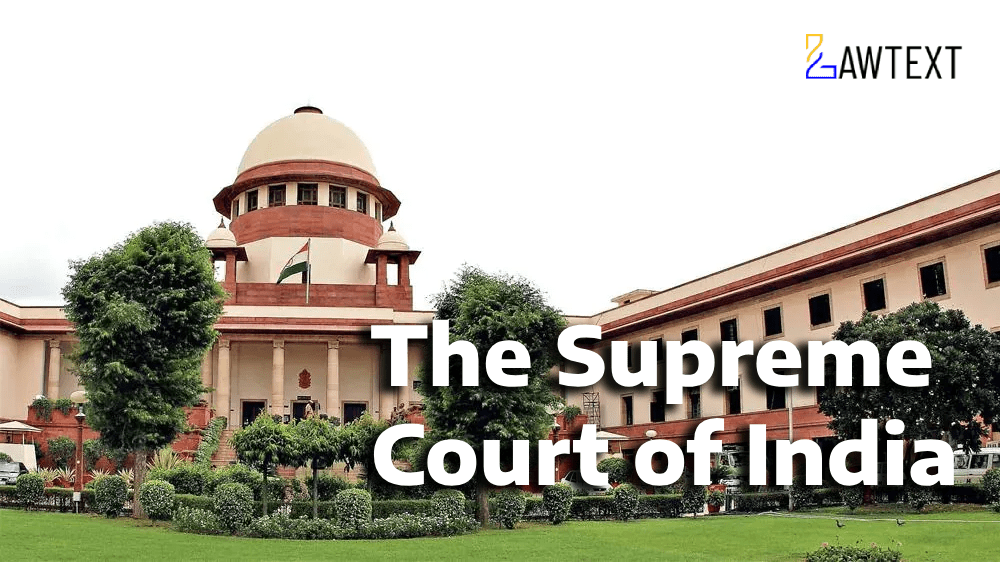
Supreme Court Dismisses Appeal on Limitation Grounds in Land Dispute Case. The appeal was dismissed as the appellant failed to provide satisfactory explanation for the delay in filing, indicating that the proper remedy lies in separate proceedings.

  • 0
Judgement Image
Font size:
Print

Case Note & Summary

The case involved a dispute over land ownership between the appellant and the respondents, stemming from a complex history of property transactions and legal proceedings. The appellant, M. Purnachander Rao, claimed to have purchased 4 acres of agricultural land in Raidurg Paigah, Ranga Reddy District, under a registered sale deed in 1996. His title traced back to Sri Waliullah Hussaini, who had acquired the land from the estate of Late Sri Moulvi Syed Akbar Hussaini, whose property was taken over by the Court of Wards after his death in 1923. The appellant contended that the land was private property and that he was a bona fide purchaser. The original suit, C.S. No. 7 of 1958, was filed by the legal heirs of the estate, leading to a preliminary decree in 1959 that excluded certain properties, including the land in question. In 2002, the legal representatives sought to include the land in the final decree, which the appellant argued was improper as he was not a party to those proceedings. The High Court dismissed the appellant's appeal on the grounds of limitation, which he challenged in the Supreme Court. The Supreme Court, after reviewing the case, upheld the High Court's decision, stating that the appellant's proper remedy would be to initiate separate proceedings rather than appeal under the Letters Patent. The appeal was dismissed with no costs, allowing the appellant the option to pursue his grievances through appropriate legal channels.

Headnote

A) Civil Procedure - Limitation - Dismissal of Appeal - Letters Patent Appeal - The appeal was dismissed by the High Court on the grounds of limitation, as the appellant failed to provide satisfactory explanation for the delay in filing. The Supreme Court upheld this dismissal, indicating that the appellant's remedy lies in initiating separate proceedings rather than appealing under the Letters Patent (Paras 6-10).

Subscribe to unlock Headnote Subscribe Now

Issue of Consideration

Whether the appeal was maintainable given the limitation period and the appellant's standing in the original suit.

Subscribe to unlock Issue of Consideration Subscribe Now

Final Decision

The Supreme Court dismissed the appeal, agreeing with the High Court's conclusion on limitation and stating that the appellant could initiate separate proceedings to address his grievances.

Law Points

  • Limitation
  • Title
  • Letters Patent Appeal
  • Civil Procedure Code
  • Final Decree
Subscribe to unlock Law Points Subscribe Now

Case Details

2008 LawText (SC) (02) 323

Civil Appeal No. 1211 of 2008

2008-02-11

Dr. Arijit Pasayat, P. Sathasivam

Mr. Anoop G. Chaudhary, Ms. June Chaudhary, Mr. Harish N. Salve, Mr. R.F. Nariman, Mr. Arun Jaitely, Mr. L. N. Rao

M. Purnachander Rao

Sri Nawab Mazaharuddin Khan (D) Thr. L.Rs.& Ors

Subscribe to unlock Case Details (Citation, Judge, Date & more) Subscribe Now

Nature of Litigation

Dispute over land ownership and title

Remedy Sought

Appellant sought to challenge the dismissal of his appeal on grounds of limitation

Filing Reason

The appellant claimed interference with his land ownership rights

Previous Decisions

The High Court dismissed the appeal on limitation grounds

Issues

Maintainability of the appeal given the limitation period Appellant's standing in the original suit

Submissions/Arguments

Appellant argued that the land was improperly included in the final decree Respondents contended that the appeal was rightly dismissed due to limitation

Ratio Decidendi

The appeal was dismissed on the grounds of limitation, emphasizing that the appellant's proper remedy lies in initiating separate proceedings rather than appealing under the Letters Patent.

Judgment Excerpts

The appeal was dismissed by the High Court on the grounds of limitation. The appellant is at liberty to initiate separate proceedings before the appropriate Court to vindicate his grievance.

Procedural History

The appellant filed an appeal against the High Court's order dismissing his appeal on limitation grounds, which arose from earlier proceedings in C.S. No. 7 of 1958.

Acts & Sections

  • Civil Procedure Code, 1908:
  • Hyderabad District Court of Wards Act:
Subscribe to unlock full Legal Analysis Subscribe Now
Related Judgement
Supreme Court Supreme Court Grants Bail to Accused in NDPS Act Case Due to Prolonged Incarceration and Right to Speedy Trial. The court held that prolonged incarceration without trial violates Article 21 of the Constitution, justifying bail under Section 37 of the...
Related Judgement
High Court Gujarat High Court Quashes Cancellation of Revenue Entry in Fragmentation Case — Sale Deed Not Void Ab Initio. Revenue Authorities Cannot Cancel Entries After 17 Years Without Proper Notice and Opportunity of Hearing Under Gujarat Prevention of Fra...