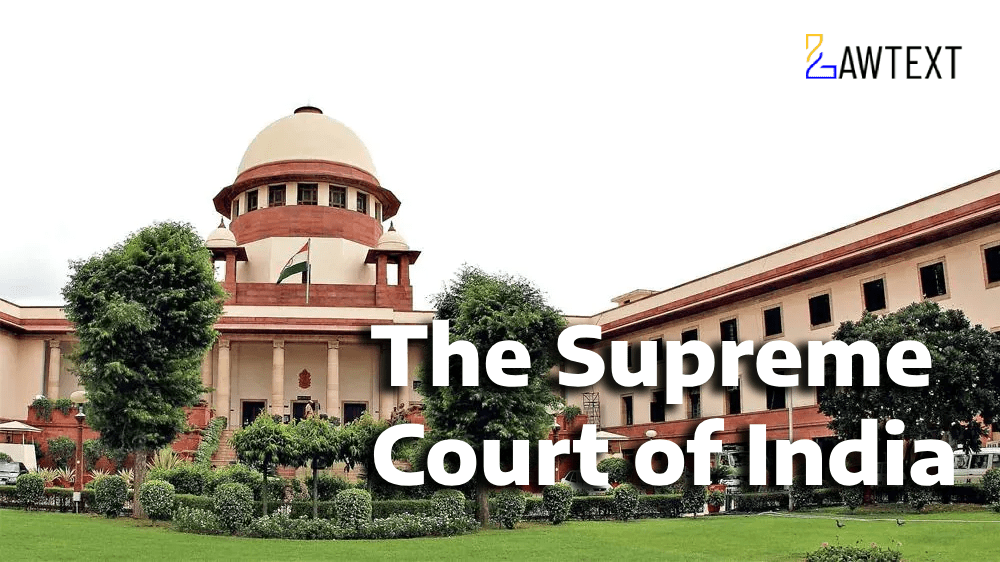
Supreme Court Upholds Appellant's Claim for Unpaid Insurance Premium in Admiralty Jurisdiction. The court ruled that unpaid insurance premiums do not qualify as necessaries under Section 5 of the Admiralty Courts Act, 1861, thus limiting the admiralty jurisdiction of the High Court.

  • 5
Judgement Image
Font size:
Print

Case Note & Summary

The dispute arose between a mutual association of ship owners and the registered owner of a vessel regarding unpaid insurance premiums. The appellant, Liverpool & London S.P. & I Association Ltd., sought to enforce a claim for unpaid insurance premiums against the vessel M.V. Sea Success I and its owner, the 2nd respondent. The appellant argued that the unpaid premiums were necessaries enforceable under the admiralty jurisdiction of the Bombay High Court. The 1st respondent vessel was arrested in Mumbai Port, leading to a suit for recovery of US$1,18,194.89, which included interest. The High Court initially referred the matter to a Division Bench after a single judge could not agree on the interpretation of 'necessaries' under the Admiralty Courts Act, 1861. The Division Bench ruled that while the claim for unpaid premiums fell within the ambit of Section 5, the refusal to reject the plaint was appealable. The appellant contended that insurance is essential for vessels to operate, while the respondents argued that unpaid premiums do not constitute necessaries. The court analyzed various precedents and statutory provisions, ultimately holding that unpaid insurance premiums do not qualify as necessaries under maritime law, thus limiting the admiralty jurisdiction of the High Court. The decision emphasized the need for a direct connection between the claim and the operation of the ship. The court's ruling clarified the interpretation of 'necessaries' in the context of maritime claims, aligning with established legal principles in England and other jurisdictions. The final judgment upheld the Division Bench's decision, affirming the limitations on claims for unpaid insurance premiums within the admiralty jurisdiction.

Headnote

A) Admiralty Law - Jurisdiction - Claims for Necessaries - Unpaid insurance premium does not qualify as necessaries under Section 5 of the Admiralty Courts Act, 1861 - The court held that unpaid insurance premiums do not constitute necessaries as they lack a direct connection to the operation of the ship, thus falling outside the admiralty jurisdiction. (Paras 1-10).

B) Admiralty Law - Cause of Action - Refusal to reject plaint under Order 7 Rule 11(a) - The court found that the plaint disclosed a cause of action, thus the refusal to reject it was deemed a judgment appealable under Clause 15 of the Letters Patent of the Bombay High Court. (Paras 11-15).

Subscribe to unlock Headnote Subscribe Now

Issue of Consideration

Whether arrears of insurance premium due and payable to the appellant by the 2nd respondent fall within the scope of Section 5 of the Admiralty Courts Act, 1861.

Subscribe to unlock Issue of Consideration Subscribe Now

Final Decision

The Supreme Court upheld the Division Bench's ruling, affirming that unpaid insurance premiums do not qualify as necessaries under Section 5 of the Admiralty Courts Act, 1861, thus limiting the admiralty jurisdiction of the High Court.

Law Points

  • Admiralty jurisdiction
  • maritime claims
  • necessaries
  • insurance premium
  • cause of action
Subscribe to unlock Law Points Subscribe Now

Case Details

2003 LawText (SC) (11) 12

Appeal (civil) 5665 of 2002, Appeal (civil) 5666 of 2002

2003-11-20

CJI, S.B. Sinha

Mr. Bharucha, Mr. Prashant S. Pratap

Liverpool & London S.P. & I Asson. Ltd.

M.V. Sea Success I & Anr.

Subscribe to unlock Case Details (Citation, Judge, Date & more) Subscribe Now

Nature of Litigation

Dispute regarding unpaid insurance premiums and admiralty jurisdiction.

Remedy Sought

Appellant sought recovery of unpaid insurance premiums and arrest of the vessel.

Filing Reason

Claim for unpaid insurance premiums due to the appellant.

Previous Decisions

High Court's initial ruling on the nature of the claim and its appealability.

Issues

Whether unpaid insurance premiums constitute necessaries under Section 5 of the Admiralty Courts Act, 1861. Whether the refusal to reject the plaint under Order 7 Rule 11(a) is appealable.

Submissions/Arguments

Appellant argued that unpaid insurance premiums are necessaries for the operation of the vessel. Respondent contended that unpaid insurance premiums do not qualify as necessaries under maritime law.

Ratio Decidendi

Unpaid insurance premiums do not constitute necessaries under maritime law, lacking a direct connection to the operation of the ship, thus falling outside the admiralty jurisdiction.

Judgment Excerpts

The court held that unpaid insurance premiums do not constitute necessaries as they lack a direct connection to the operation of the ship. The refusal to reject the plaint was deemed a judgment appealable under Clause 15 of the Letters Patent of the Bombay High Court.

Procedural History

The appellant filed a suit for recovery of unpaid insurance premiums and arrest of the vessel. The High Court referred the matter to a Division Bench after an initial ruling on the nature of the claim.

Acts & Sections

  • Admiralty Courts Act, 1861: Section 5
  • Admiralty Courts Act, 1840: Section 3, Section 4, Section 6
  • Supreme Court of Judicature (Consolidation) Act, 1925: Section 22
  • Colonial Courts of Admiralty Act, 1890: Section 2
  • Colonial Courts of Admiralty (India) Act, 1891: Section 2
Subscribe to unlock full Legal Analysis Subscribe Now
Related Judgement
Supreme Court Supreme Court Dismisses Appeal in Negotiable Instruments Act Case — No Grounds for Interference Established. The High Court's modification of the trial court's conviction was impermissible under Section 362 of the Code of Criminal Procedure.
Related Judgement
Supreme Court Supreme Court Acquits Accused in Murder Case Due to Insufficient Evidence and Witness Silence. Conviction under Sections 302 and 109 IPC set aside as prosecution failed to prove guilt beyond reasonable doubt.