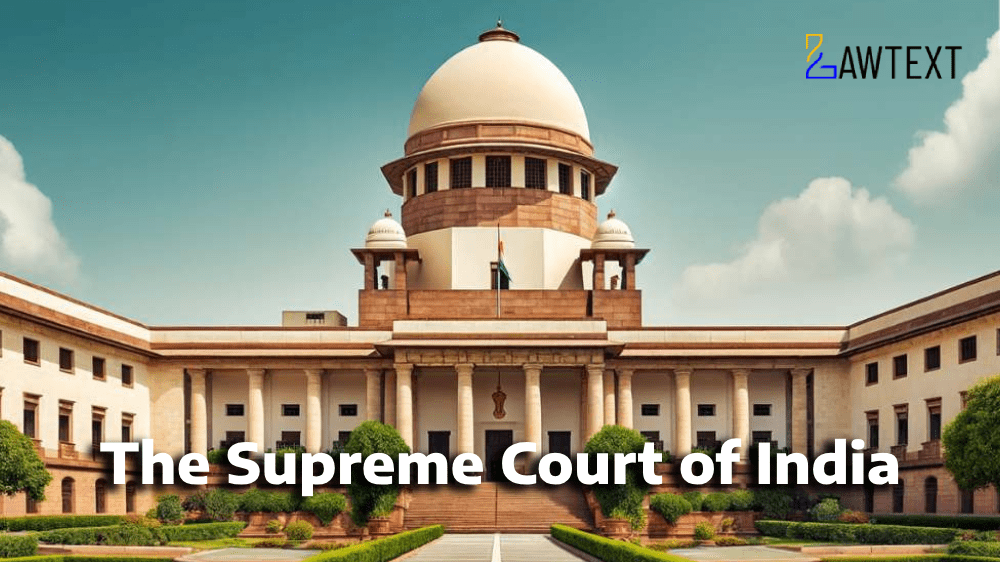
Supreme Court Allows Appeal in Civil Procedure Case — Reinstatement of Trial Court's Orders on Court Fees.

  • 3
Judgement Image
Font size:
Print

Case Note & Summary

The case involved a civil appeal concerning the validity of orders related to the payment of court fees in a suit for recovery of money. The appellant, P.K. Palanisamy, had advanced a loan to the first respondent, N. Arumugham, which was not repaid. After several attempts to recover the amount, including the issuance of cheques that bounced, the appellant filed a suit in 1998. The plaint was initially presented with a deficit court fee, and the trial court granted extensions for payment multiple times. The respondents later filed an application to reject the plaint, claiming it was barred by limitation due to the delayed payment of court fees. The trial court dismissed this application, but the High Court allowed a revision petition, setting aside the trial court's orders. The appellant appealed to the Supreme Court, arguing that the High Court erred in its judgment. The Supreme Court found that the trial court's orders had not been challenged by the respondents at the appropriate time and that the High Court's interference was unjustified. The court reiterated that once the trial court exercised its discretion under Section 149 of the Code of Civil Procedure, the orders regarding court fees should not have been questioned. The Supreme Court ultimately allowed the appeal and reinstated the trial court's orders without costs.

Headnote

A) Civil Procedure - Court Fees - Validity of Orders - Code of Civil Procedure, 1908, Sections 148, 149 - The trial court's orders extending time for payment of deficit court fees were not questioned by the respondents and thus could not be set aside by the High Court. The court emphasized that once the trial court exercised its jurisdiction under Section 149, the validity of the orders should not have been challenged at a later stage. Held that the High Court's interference was unwarranted (Paras 12-17).

Subscribe to unlock Headnote Subscribe Now

Issue of Consideration

Whether the trial court's orders regarding the extension of time for payment of deficit court fees were valid and whether the High Court erred in setting them aside.

Subscribe to unlock Issue of Consideration Subscribe Now

Final Decision

The Supreme Court set aside the High Court's judgment, reinstating the trial court's orders regarding the extension of time for payment of deficit court fees. The appeal was allowed without costs.

Law Points

  • Court Fees
  • Deficit Court Fees
  • Condonation of Delay
  • Civil Procedure Code
  • Article 227
  • Jurisdiction of Courts
Subscribe to unlock Law Points Subscribe Now

Case Details

2009 LawText (SC) (07) 206

Civil Appeal No. of 2009 [Arising out of SLP (Civil) No. 2308 of 2009]

2009-07-23

S.B. Sinha, Deepak Verma

E. Padmanabhan, Krishnan Venugopal

P.K. Palanisamy

N. Arumugham & Anr.

Subscribe to unlock Case Details (Citation, Judge, Date & more) Subscribe Now

Nature of Litigation

Civil appeal regarding court fees and rejection of plaint.

Remedy Sought

Appellant sought reinstatement of trial court's orders.

Filing Reason

Respondents filed application to reject plaint claiming it was barred by limitation.

Previous Decisions

Trial court dismissed respondents' application; High Court allowed revision petition.

Issues

Validity of trial court's orders on court fees Jurisdiction of High Court to set aside trial court's orders

Submissions/Arguments

Appellant argued that the High Court erred in setting aside valid trial court orders. Respondents contended that the trial court should have issued notice before extending time for court fees.

Ratio Decidendi

The trial court's orders regarding court fees, once made, cannot be set aside without proper challenge; Section 149 of the Code of Civil Procedure allows for the extension of time for payment of court fees.

Judgment Excerpts

The trial court's orders extending time for payment of deficit court fees were not questioned by the respondents. Once the trial court exercised its jurisdiction under Section 149, the validity of the orders should not have been challenged. The High Court's interference was unwarranted.

Procedural History

The appellant filed a suit for recovery of money in 1998 with a deficit court fee. The trial court granted extensions for payment of court fees multiple times. The respondents later filed an application to reject the plaint, which was dismissed by the trial court. The High Court allowed a revision petition, setting aside the trial court's orders, leading to the present appeal.

Acts & Sections

  • Code of Civil Procedure, 1908: 148, 149
  • Court Fees Act, 1870: 4
Subscribe to unlock full Legal Analysis Subscribe Now
Related Judgement
High Court Bombay High Court Dismisses Union of India's Petition Challenging CAT Order in Recruitment Irregularity Case. Court upholds CAT's direction to consider candidates for driver posts despite scrapping of select panel due to alleged corrupt practices.
Related Judgement
Supreme Court Supreme Court Allows State Appeal in Food Adulteration Case, Upholding Prosecution Under Indian Penal Code Alongside Food Safety Act. The Court Held That the Food Safety and Standards Act, 2006 Does Not Override Sections 272 and 273 IPC, as IPC Is No...