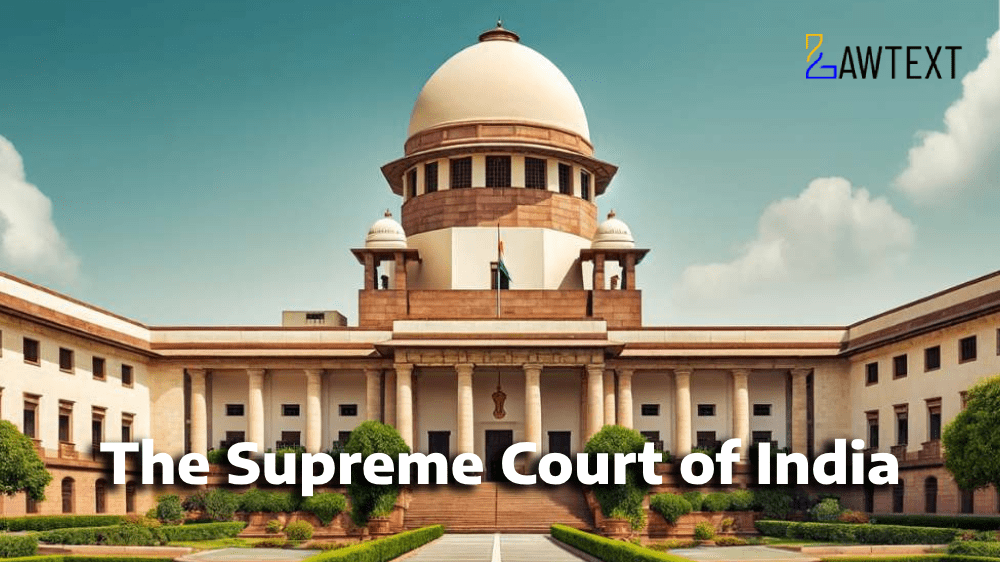
Supreme Court Upholds Appellants in Civil Appeal Regarding Writ Jurisdiction Over Civil Court Orders — Clarifies Limits of Writ Jurisdiction. Citing earlier judgments, the court emphasized that writ jurisdiction is not applicable to private disputes over property.

  • 1
Judgement Image
Font size:
Print

Case Note & Summary

The dispute arose from a civil suit filed by the appellants seeking an injunction against the respondents regarding possession of land. The appellants initially filed a suit in the Civil Court, which led to a series of proceedings including a civil revision and a writ petition. The High Court intervened, leading to the current appeal. The core legal issue was whether the High Court could exercise its writ jurisdiction to interfere with a civil court's order. The Supreme Court analyzed various precedents, including the landmark case of Sohan Lal v. Union of India, which established that writs cannot be issued against private individuals in property disputes. The court reiterated that the jurisdiction under Article 226 is extraordinary and should not be used to adjudicate private rights, which are better suited for civil courts. The court also noted that the principles established in earlier cases, such as Mirajkar and Hanif, remain applicable, emphasizing that judicial orders of civil courts are not amenable to writ jurisdiction. Ultimately, the Supreme Court disagreed with the High Court's decision and upheld the position that civil disputes should be resolved through appropriate civil proceedings rather than through writ petitions. The matter was suggested for consideration by a larger bench to clarify the law on this issue.

Headnote

A) Writ Jurisdiction - Interference with Civil Court Orders - Limits of Writ Jurisdiction - Constitution of India, Article 226 - The court held that writ jurisdiction cannot be invoked to interfere with judicial orders of civil courts in property disputes between private individuals, as such matters are best resolved in civil suits. The court emphasized that the extraordinary jurisdiction under Article 226 is not intended to replace ordinary remedies available under civil law (Paras 1-32).

Subscribe to unlock Headnote Subscribe Now

Issue of Consideration

Whether the High Court can interfere with a judicial order passed by a civil court of competent jurisdiction in exercise of its extraordinary writ jurisdiction.

Subscribe to unlock Issue of Consideration Subscribe Now

Final Decision

The Supreme Court held that the High Court could not interfere with the judicial orders of civil courts in property disputes between private individuals. The court emphasized that such matters should be resolved through civil suits and not through writ petitions.

Law Points

  • writ jurisdiction
  • civil court orders
  • mandamus
  • extraordinary jurisdiction
  • property disputes
Subscribe to unlock Law Points Subscribe Now

Case Details

2009 LawText (SC) (04) 271

Civil Appeal No. 2548 of 2009

2009-04-15

Asok Kumar Ganguly, Dr. Arijit Pasayat

Radhey Shyam & Another

Chhabi Nath & Others

Subscribe to unlock Case Details (Citation, Judge, Date & more) Subscribe Now

Nature of Litigation

Civil dispute regarding property possession and injunction.

Remedy Sought

Appellants sought to challenge the High Court's order interfering with civil court proceedings.

Filing Reason

The appellants filed a civil suit for injunction against the respondents.

Previous Decisions

The High Court had previously intervened in the civil court's order, which was contested by the appellants.

Issues

Whether the High Court can interfere with a judicial order passed by a civil court in exercise of its extraordinary writ jurisdiction.

Submissions/Arguments

Appellants argued that the High Court's intervention was inappropriate as it involved private disputes best resolved in civil courts. Respondents contended that the High Court had the jurisdiction to intervene in the matter.

Ratio Decidendi

The Supreme Court reiterated that writ jurisdiction under Article 226 is not intended to adjudicate private rights in civil disputes, and judicial orders of civil courts are not amenable to writ jurisdiction.

Judgment Excerpts

The court held that writ jurisdiction cannot be invoked to interfere with judicial orders of civil courts in property disputes between private individuals. The jurisdiction under Article 226 is extraordinary and should not be used to adjudicate private rights.

Procedural History

The appellants filed a civil suit for injunction, which led to a series of revisions and writ petitions culminating in the appeal before the Supreme Court.

Acts & Sections

  • Constitution of India: Article 226, Article 227
Subscribe to unlock full Legal Analysis Subscribe Now
Related Judgement
High Court Bombay High Court Quashes Assessment Order for Violation of Natural Justice Under Section 144B of Income Tax Act, 1961 — Failure to Issue Show Cause Notice-Cum-Draft Assessment Order Renders Order Invalid. The court held that the mandatory procedur...
Related Judgement
High Court Supreme Court Dismisses Appeal in Election Petition Case Under Representation of the People Act, 1951 - Upholds High Court's Ruling to Proceed with Trial on Corrupt Practice Allegation. The Court Held That Non-Compliance with High Court Rules Does No...