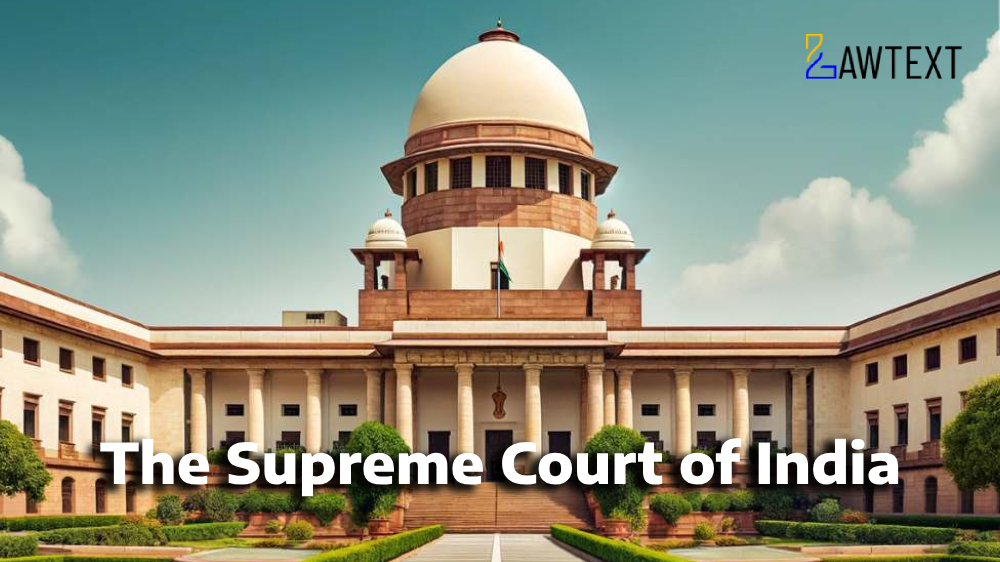
Supreme Court Dismisses Appeal Against Noise Pollution Guidelines in Religious Practices — Upholds Public Order and Health. Citing the need for balance between religious freedom and public tranquility, the court reinforced the enforcement of noise regulations.

  • 0
Judgement Image
Font size:
Print

Case Note & Summary

The case involved an appeal by the Church of God (Full Gospel) against a High Court order regarding noise pollution caused by its religious activities. The Church, located in Chennai, was accused by the K.K.R. Majestic Colony Welfare Association of disturbing the peace through the use of loudspeakers and musical instruments during prayers. The Welfare Association filed a complaint with the Tamil Nadu Pollution Control Board, leading to a High Court directive for the Church to reduce noise levels. The Church contended that the complaints were motivated by an intent to hinder its religious practices and that the noise pollution was primarily due to vehicular traffic, not its activities. The High Court, however, upheld the need for noise control, referencing previous judgments that established guidelines for managing noise pollution. The Supreme Court dismissed the appeal, emphasizing that the right to practice religion must be balanced against the rights of others to enjoy a peaceful environment. The court noted that no religion mandates the use of loudspeakers or drums in a manner that disrupts the community's peace. It reiterated the importance of enforcing noise pollution regulations under the Environment (Protection) Act and related rules to safeguard public health and maintain order. The court concluded that the High Court's directions were lawful and necessary for the enforcement of noise control measures, thereby dismissing the appeal.

Headnote

A) Constitutional Law - Right to Religious Practice - Limitations on Religious Freedom - Constitution of India, 1950, Articles 25, 26 - The court held that the right to practice religion is not absolute and must coexist with the rights of others to enjoy peace and quiet, particularly in the context of noise pollution. The court emphasized that no religion prescribes the use of loudspeakers or drums that disturb others, thus upholding the need for reasonable restrictions (Paras 6-7).

B) Environmental Law - Noise Pollution Control - Enforcement of Noise Regulations - Environment (Protection) Act, 1986, Noise Pollution (Regulation and Control) Rules, 2000 - The court affirmed the necessity of enforcing noise pollution regulations to protect public health and tranquility, rejecting claims that religious practices should be exempt from such regulations (Paras 5-6).

Subscribe to unlock Headnote Subscribe Now

Issue of Consideration

Whether a religious community can claim the right to create noise pollution in the name of religious practices.

Subscribe to unlock Issue of Consideration Subscribe Now

Final Decision

The Supreme Court dismissed the appeal, affirming the High Court's order to enforce noise pollution regulations and emphasizing the need to balance religious practices with the rights of others to enjoy peace.

Law Points

  • Noise pollution
  • religious practices
  • public order
  • Environment (Protection) Act
  • 1986
  • Articles 25 and 26 of the Constitution of India
  • Madras City Police Act
  • 1888
  • Madras Town Nuisance Act
  • 1989
  • Noise Pollution (Regulation and Control) Rules
  • 2000
Subscribe to unlock Law Points Subscribe Now

Case Details

2000 LawText (SC) (08) 56

2000-08-30

M B Shah, S.N. Phukan

G. Krishnan

Church of God (Full Gospel) in India

K.K.R. Majestic Colony Welfare Association and Others

Subscribe to unlock Case Details (Citation, Judge, Date & more) Subscribe Now

Nature of Litigation

Appeal against High Court order regarding noise pollution from religious activities.

Remedy Sought

The Church sought to overturn the High Court's directive to control noise levels.

Filing Reason

Complaint regarding noise pollution affecting residents' peace.

Previous Decisions

High Court directed enforcement of noise control measures based on prior judgments.

Issues

Can a religious community claim the right to create noise pollution? What are the limitations on the right to practice religion in relation to public order?

Submissions/Arguments

The Church argued that noise pollution was primarily due to vehicular traffic and not its activities. The Welfare Association contended that the Church's activities disturbed the peace and that noise regulations should apply.

Ratio Decidendi

The court held that the right to practice religion is subject to reasonable restrictions in the interest of public order and health, and that noise pollution regulations must be enforced to protect the rights of all citizens.

Judgment Excerpts

In our view, in a civilized society in the name of religion, activities which disturb old or infirm persons, students or children having their sleep in the early hours or during day-time or other persons carrying on other activities cannot be permitted. The right to practice religion is not absolute and must coexist with the rights of others to enjoy peace and quiet. No religion prescribes that prayers should be performed by disturbing the peace of others nor does it preach that they should be through voice-amplifiers or beating of drums.

Procedural History

The appeal was filed against the judgment and order dated 19.4.1999 passed by the High Court of Judicature at Madras in Criminal O.P. No. 61 of 1998.

Acts & Sections

  • Environment (Protection) Act:
  • Madras City Police Act: Section 41, Section 71(a)
  • Madras Town Nuisance Act: Section 10
  • Noise Pollution (Regulation and Control) Rules: Rule 3, Rule 4, Rule 5, Rule 6, Rule 7, Rule 8
Subscribe to unlock full Legal Analysis Subscribe Now
Related Judgement
Supreme Court Supreme Court Modifies High Court Order on Employment and Compensation. The direction for compassionate appointment was unsustainable as the rules did not permit it when the employee was retired on invalidation pension.
Related Judgement
Supreme Court Supreme Court Upholds Licensing Conditions on Orchestra Bars Under Maharashtra Police Act, 1951. Gender-Based Numerical Restrictions on Performers Held Valid as Reasonable Restrictions in Public Interest Under Article 19(6) of the Constitution.