
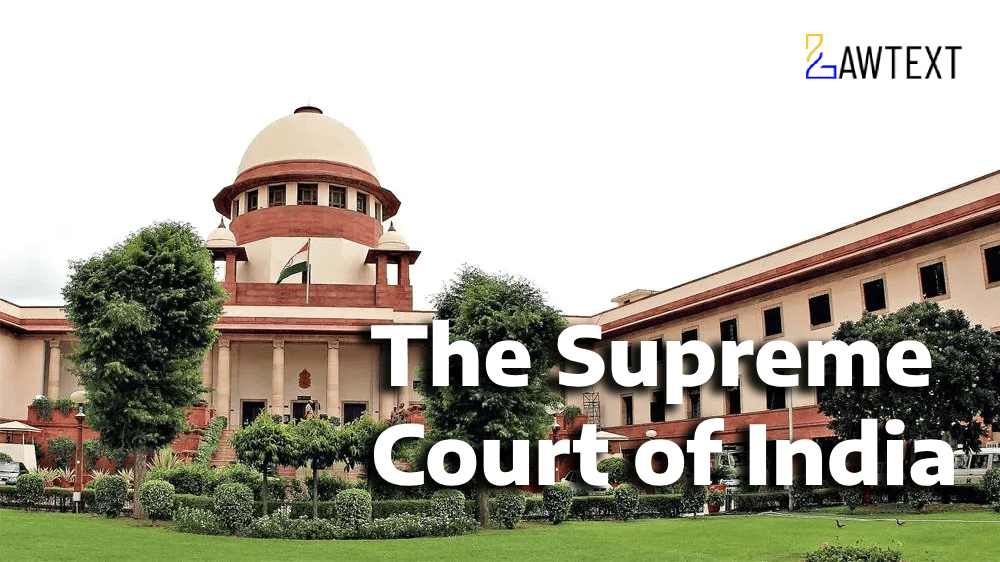
Case Note & Summary
The Supreme Court, in a suo motu writ petition, examined the scope and limitations of the power of the appropriate Government to remit sentences under Section 432 of the Code of Criminal Procedure, 1973 (CrPC) and its corresponding provision under Section 473 of the Bharatiya Nagarik Suraksha Sanhita, 2023 (BNSS). The Court noted that while Section 432(1) empowers the Government to suspend or remit sentences, sub-section (2) requires an application to be made by the convict or on his behalf. The Court clarified that this power cannot be exercised suo motu, as held in Sangeet v. State of Haryana and Mohinder Singh v. State of Punjab. However, where a policy for premature release exists, the State must consider all eligible convicts even without a formal application, as held in Rashidul Jafar v. State of Uttar Pradesh. The Court also addressed the nature of conditions that can be imposed while granting remission, stating that they must be reasonable and not arbitrary. Regarding revocation of remission, the Court held that automatic revocation upon breach of conditions without giving the convict an opportunity of hearing is impermissible; a reasoned order must be passed. Finally, the Court held that reasons must be recorded while rejecting applications for permanent remission to ensure transparency and prevent arbitrariness. The judgment emphasizes procedural fairness and constitutional guarantees under Articles 14 and 21.
Headnote
A) Criminal Procedure - Remission of Sentence - Section 432 CrPC, Section 473 BNSS - Requirement of Application - The power to grant remission under Section 432 CrPC cannot be exercised suo motu; an application by the convict or on his behalf is mandatory under sub-section (2). The appropriate Government must seek the opinion of the presiding judge before granting remission. (Paras 6-8) B) Criminal Procedure - Remission of Sentence - Conditions - Section 432 CrPC, Section 473 BNSS - Reasonableness of Conditions - Conditions imposed while granting remission must be reasonable and not arbitrary. They must be capable of being fulfilled and should not violate constitutional guarantees under Articles 14 and 21. (Para 9) C) Criminal Procedure - Remission of Sentence - Revocation - Section 432 CrPC, Section 473 BNSS - Automatic Revocation - Automatic revocation of remission upon breach of conditions without giving the convict an opportunity of hearing is impermissible. The appropriate Government must pass a reasoned order after considering the convict's explanation. (Para 10) D) Criminal Procedure - Remission of Sentence - Rejection - Section 432 CrPC, Section 473 BNSS - Recording of Reasons - While rejecting an application for permanent remission, the appropriate Government must record reasons in writing. This ensures transparency and prevents arbitrary exercise of power. (Para 11) E) Constitutional Law - Right to Life and Personal Liberty - Articles 14 and 21 - Implementation of Remission Policy - Once a policy for premature release is framed, it must be implemented in an objective and transparent manner. The State cannot deny consideration to eligible convicts due to lack of application or resources. (Para 8)
Issue of Consideration
Whether the appropriate Government can grant remission without an application; nature of conditions that can be imposed; whether automatic revocation of remission is valid; whether reasons must be recorded for rejection of remission applications
Final Decision
The Court held that: (1) The power to grant remission under Section 432 CrPC cannot be exercised suo motu; an application is mandatory. However, where a policy for premature release exists, the State must consider eligible convicts even without a formal application. (2) Conditions imposed must be reasonable and not arbitrary. (3) Automatic revocation of remission without hearing is impermissible; a reasoned order must be passed. (4) Reasons must be recorded while rejecting applications for permanent remission.
Law Points
- Remission power under Section 432 CrPC cannot be exercised suo motu
- application by convict or on his behalf is mandatory
- conditions for remission must be reasonable and not arbitrary
- automatic revocation of remission without hearing is impermissible
- reasons must be recorded while rejecting remission applications
- policy for premature release must be implemented transparently and objectively





