
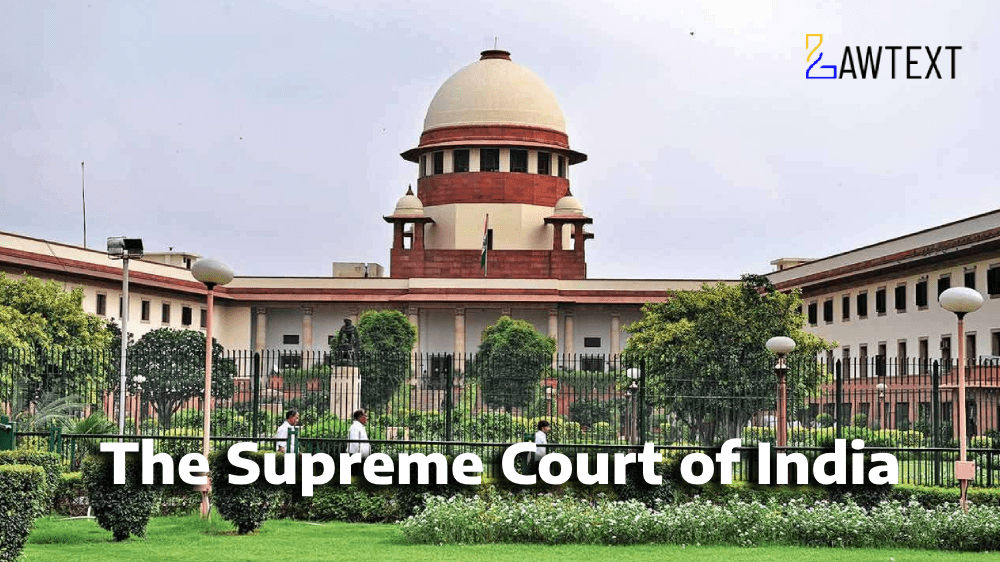
Supreme Court Allows Forfeiture of Gratuity for Misconduct Involving Moral Turpitude Without Criminal Conviction — Section 4(6)(b)(ii) of Payment of Gratuity Act, 1972 Does Not Require Conviction. The Court held that the disciplinary authority can determine whether the misconduct constitutes an offence involving moral turpitude, and forfeiture is permissible even without a criminal conviction.

In Favour of Prosecution
  • 1180
Judgement Image
Font size:
Print

Case Note & Summary

The Supreme Court considered three civil appeals arising from judgments of the High Courts that had set aside forfeiture of gratuity imposed on employees terminated for misconduct involving moral turpitude. The appellant employers, Western Coalfields Ltd. (a PSU) and Maharashtra State Road Transport Corporation (MSRTC), challenged the High Court decisions which relied on the Supreme Court's earlier decision in Union Bank of India v. C.G. Ajay Babu to hold that forfeiture under Section 4(6)(b)(ii) of the Payment of Gratuity Act, 1972 requires a criminal conviction. The respondent employees had been dismissed from service after disciplinary proceedings found them guilty of acts such as theft, misappropriation, or other misconduct involving moral turpitude, but no criminal case was filed or resulted in conviction. The core legal issue was whether forfeiture of gratuity is permissible under Section 4(6)(b)(ii) without a criminal conviction. The appellants argued that the provision only requires that the act constitutes an offence involving moral turpitude, not that the employee be convicted by a criminal court. The respondents contended that the phrase 'offence involving moral turpitude' implies a criminal conviction. The Supreme Court analyzed the statutory language and held that the words 'duly established in a Court of Law' cannot be read into Section 4(6)(b)(ii). The Court noted that the interpretation in C.G. Ajay Babu was obiter because in that case, Section 4(6) was held inapplicable to the bank employees due to a bipartite settlement under Section 4(5). The Court further observed that the standard of proof in disciplinary proceedings is preponderance of probabilities, which is different from the criminal standard of beyond reasonable doubt. Therefore, the disciplinary authority can determine whether the misconduct constitutes an offence involving moral turpitude without a criminal conviction. The Court allowed the appeals, set aside the impugned judgments, and restored the orders of forfeiture of gratuity, holding that the forfeiture was valid under Section 4(6)(b)(ii) of the Act.

Headnote

A) Payment of Gratuity Act, 1972 - Forfeiture of Gratuity - Section 4(6)(b)(ii) - Requirement of Conviction - The provision enables forfeiture if the employee is terminated for any act which constitutes an offence involving moral turpitude committed in the course of employment. The words 'duly established in a Court of Law' cannot be supplied to the provision. The standard of proof in disciplinary proceedings is preponderance of probabilities, not beyond reasonable doubt. Hence, forfeiture is permissible even without a criminal conviction. (Paras 2, 9-10)

B) Payment of Gratuity Act, 1972 - Obiter Dicta - Union Bank of India v. C.G. Ajay Babu - The interpretation of Section 4(6)(b)(ii) in C.G. Ajay Babu was obiter because the provision was held inapplicable to the bank employees by virtue of Section 4(5). Therefore, the observation that a conviction is required is not binding. (Para 9)

C) Payment of Gratuity Act, 1972 - Section 4(6)(b)(ii) - Meaning of 'Offence' - As per the General Clauses Act, 'offence' means any act or omission made punishable by any law and does not require a conviction. The disciplinary authority can determine whether the misconduct constitutes an offence involving moral turpitude. (Para 10)

Subscribe to unlock Headnote Subscribe Now

Issue of Consideration

Whether forfeiture of gratuity under Section 4(6)(b)(ii) of the Payment of Gratuity Act, 1972 is permissible when the employee is terminated for misconduct constituting an offence involving moral turpitude, but there is no criminal conviction or even a criminal proceeding initiated.

Subscribe to unlock Issue of Consideration Subscribe Now

Final Decision

The Supreme Court allowed the appeals, set aside the impugned judgments of the High Courts, and restored the orders of forfeiture of gratuity. The Court held that forfeiture under Section 4(6)(b)(ii) of the Payment of Gratuity Act, 1972 does not require a criminal conviction; the disciplinary authority can determine whether the misconduct constitutes an offence involving moral turpitude.

Law Points

  • Forfeiture of gratuity under Section 4(6)(b)(ii) of the Payment of Gratuity Act
  • 1972 does not require a criminal conviction
  • the act constituting an offence involving moral turpitude can be established in a disciplinary proceeding
  • the words 'duly established in a Court of Law' cannot be read into the provision
  • the interpretation in Union Bank of India v. C.G. Ajay Babu was obiter as Section 4(6) was inapplicable to that case
  • standard of proof in disciplinary proceedings is preponderance of probabilities
  • not beyond reasonable doubt.
Subscribe to unlock Law Points Subscribe Now

Case Details

2025 LawText (SC) (2) 174

Civil Appeal No.2608 of 2025 (@ SLP (C) No.10088 of 2020) and connected appeals

2025-02-26

K. Vinod Chandran

2025 INSC 233

Tushar Mehta (Solicitor General), Mayuri Raghuvanshi, Shivaji M. Jadhav

Western Coal Fields Ltd. and Others

Manohar Govinda Fulzele and Others

Subscribe to unlock Case Details (Citation, Judge, Date & more) Subscribe Now

Nature of Litigation

Civil appeals against High Court judgments setting aside forfeiture of gratuity imposed on employees terminated for misconduct involving moral turpitude.

Remedy Sought

Appellants (employers) sought to set aside the High Court judgments and uphold the forfeiture of gratuity.

Filing Reason

The High Courts held that forfeiture of gratuity under Section 4(6)(b)(ii) of the Payment of Gratuity Act, 1972 requires a criminal conviction, which was not present.

Previous Decisions

The High Courts relied on Union Bank of India v. C.G. Ajay Babu to set aside the forfeiture. The Supreme Court had earlier in Jaswant Singh Gill v. Bharat Coking Coal Ltd. held that forfeiture requires fulfillment of conditions, but that case was overruled in part by Mahanadi Coalfields Ltd. v. Rabindranath Choubey.

Issues

Whether forfeiture of gratuity under Section 4(6)(b)(ii) of the Payment of Gratuity Act, 1972 requires a criminal conviction for an offence involving moral turpitude. Whether the interpretation in Union Bank of India v. C.G. Ajay Babu that the offence must be 'duly established in a Court of Law' is binding or obiter.

Submissions/Arguments

Appellants argued that Section 4(6)(b)(ii) only requires the act to constitute an offence involving moral turpitude, not a conviction; the disciplinary authority can determine this based on preponderance of probabilities. Respondents argued that the phrase 'offence involving moral turpitude' implies a criminal conviction, relying on C.G. Ajay Babu.

Ratio Decidendi

Forfeiture of gratuity under Section 4(6)(b)(ii) of the Payment of Gratuity Act, 1972 is permissible if the employee is terminated for an act which constitutes an offence involving moral turpitude committed in the course of employment. The provision does not require a criminal conviction; the words 'duly established in a Court of Law' cannot be read into it. The standard of proof in disciplinary proceedings is preponderance of probabilities, not beyond reasonable doubt. The interpretation in Union Bank of India v. C.G. Ajay Babu was obiter as Section 4(6) was inapplicable to that case.

Judgment Excerpts

The words 'duly established in a Court of Law' cannot be supplied to the provision. The interpretation in C.G. Ajay Babu was uncalled for since the provisions of Section 4, including sub-section (6) was found to be inapplicable to the employer Bank and its employee, by virtue of sub-section (5) of Section 4. The interpretation, hence, with due respect was an obiter making a reference unnecessary. An 'Offence' as defined in the General Clauses Act, means 'any act or omission made punishable by any law for the time being' and does not call for a conviction.

Procedural History

The employees were terminated from service after disciplinary proceedings found them guilty of misconduct involving moral turpitude. The employers forfeited gratuity under Section 4(6)(b)(ii) of the Payment of Gratuity Act, 1972. The employees challenged the forfeiture before the High Courts, which set aside the forfeiture relying on Union Bank of India v. C.G. Ajay Babu. The employers appealed to the Supreme Court by way of special leave petitions, which were granted and heard together.

Acts & Sections

  • Payment of Gratuity Act, 1972: Section 4, Section 4(5), Section 4(6), Section 4(6)(b)(ii)
  • General Clauses Act, 1897: Section 3(38)
Subscribe to unlock full Legal Analysis Subscribe Now
Related Judgement
High Court Bombay High Court Hears Appeal Against Vacation of Interim Injunction in 'RACIRAFT' vs 'ESIRAFT' Trademark Case. The Court Examines Whether the Impugned Mark 'ESIRAFT' is Deceptively Similar to the Registered Mark 'RACIRAFT' for Pharmaceutical Produc...
Related Judgement
Supreme Court Supreme Court Upholds Detenu's Release in Defence of India Rules Case Due to Misuse of 'Law and Order' Instead of 'Public Order'. District Magistrate's Detention Order Under Rule 30(1)(b) of Defence of India Rules, 1962 Cited 'Maintenance of Law and ...





