
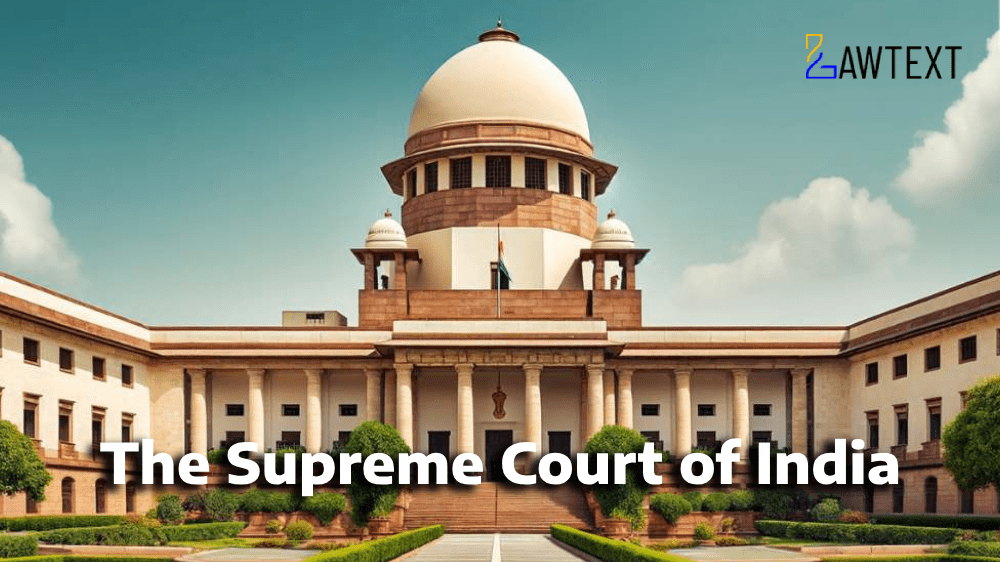
Case Note & Summary
The Supreme Court of India adjudicated a batch of civil appeals arising from a common judgment of the Karnataka High Court dated 28 March 2011. The appeals involved two principal issues: the constitutional validity of the Karnataka Motor Vehicles Taxation and Certain Other Law (Amendment) Act, 2003 (Act No. 9 of 2003), which repealed the Karnataka Contract Carriages (Acquisition) Act, 1976 (KCCA Act), and the legality of delegating the power to grant contract carriage permits to the Secretary of the State Transport Authority (STA) or Regional Transport Authority (RTA) under the Motor Vehicles Act, 1988 (MV Act). The KCCA Act, enacted in 1976, had acquired privately operated contract carriages and vested their permits in state-owned corporations like the Karnataka State Road Transport Corporation (KSRTC). Its constitutionality was upheld by the Supreme Court in State of Karnataka v. Ranganatha Reddy (AIR 1978 SC 215) and Vijayakumar Sharma v. State of Karnataka ((1990) 2 SCC 562). In 2003, the Karnataka Legislature repealed the KCCA Act to liberalize public transport and address shortages. Subsequently, private bus operators applied for contract carriage permits, and in some cases, Secretaries of STA/RTA granted such permits under Rules 55 and 56 of the Karnataka Motor Vehicle Rules, 1989 (KMV Rules), which purported to delegate the permit-granting power. KSRTC and its employees challenged the repeal and the delegation before the Karnataka High Court. A Single Judge of the High Court, on 17 November 2004, held Rules 55 and 56 ultra vires the MV Act, and on 16 December 2004, declared the 2003 Repeal Act unconstitutional. On appeal, a Division Bench of the High Court, by judgment dated 28 March 2011, upheld the constitutional validity of the 2003 Repeal Act but invalidated the delegation of permit-granting power to the Secretary. Aggrieved, private bus operators and the STA appealed against the delegation ruling, while KSRTC appealed against the validity of the repeal. The Supreme Court framed two issues: (i) whether the 2003 Repeal Act is constitutionally valid, and (ii) whether the Secretary can be delegated the power to grant contract carriage permits. On the first issue, the Court held that the State Legislature has plenary power to repeal a statute enacted under Entry 42 of the Concurrent List, and no fresh Presidential assent is required. The repeal does not overrule the Supreme Court's earlier judgments upholding the KCCA Act, as the Legislature retains the power to modify or repeal its own enactments. On the second issue, the Court held that the power to grant permits under Chapter V of the MV Act is a quasi-judicial function that must be exercised by the multi-member STA or RTA as per Section 68. Delegation to the Secretary alone is impermissible as it bypasses the statutory scheme requiring collective adjudication. Consequently, Rules 55 and 56 of the KMV Rules, to the extent they permit such delegation, are ultra vires the MV Act. The Supreme Court dismissed the appeals challenging the delegation ruling and allowed the appeals challenging the validity of the repeal, thereby upholding the 2003 Repeal Act. The judgment clarifies the scope of legislative competence in repealing state Acts and reinforces the principle that quasi-judicial powers cannot be delegated to a single officer unless expressly authorized by statute.
Headnote
A) Constitutional Law - Legislative Competence - Repeal of State Act - Karnataka Act No. 9 of 2003 - The State Legislature has plenary power to repeal a statute enacted under Entry 42 of List III (Concurrent List) without requiring fresh Presidential assent, as the repeal is a legislative act within its domain and does not overrule a prior Supreme Court judgment upholding the original Act. (Paras 4.10, 10-12) B) Motor Vehicles Act - Delegation of Powers - Quasi-Judicial Function - Sections 68, 96, Motor Vehicles Act, 1988 - The power to grant contract carriage permits under Chapter V is a quasi-judicial function that must be exercised by the multi-member State Transport Authority or Regional Transport Authority, and cannot be delegated to the Secretary alone, as such delegation bypasses the statutory scheme requiring collective adjudication. (Paras 4.10, 13-15) C) Motor Vehicles Act - Ultra Vires - Rules 55 and 56, Karnataka Motor Vehicle Rules, 1989 - Rules 55 and 56 of the KMV Rules, to the extent they permit delegation of permit-granting power to the Secretary, are ultra vires the Motor Vehicles Act, 1988, as they conflict with the mandatory composition and functions of the transport authorities under Section 68. (Paras 4.8, 4.10, 13-15)
Issue of Consideration
Whether the Karnataka Act No. 9 of 2003 repealing the Karnataka Contract Carriages (Acquisition) Act, 1976 is constitutionally valid; and whether the Secretary of the State Transport Authority or Regional Transport Authority can be delegated the power to grant contract carriage permits under the Motor Vehicles Act, 1988.
Final Decision
The Supreme Court dismissed the appeals challenging the High Court's ruling on delegation (SLP(C) Nos. 27833-27834/2011 and 32499-32525/2011) and allowed the appeals challenging the validity of the repeal (SLP(C) Nos. 25787-25956/2012), thereby upholding the constitutional validity of the Karnataka Act No. 9 of 2003 and affirming that the Secretary cannot be delegated the power to grant contract carriage permits.
Law Points
- Legislative competence to repeal a state Act under Concurrent List
- Delegation of quasi-judicial powers
- Ultra vires doctrine
- Motor Vehicles Act 1988
- Karnataka Motor Vehicle Rules 1989





