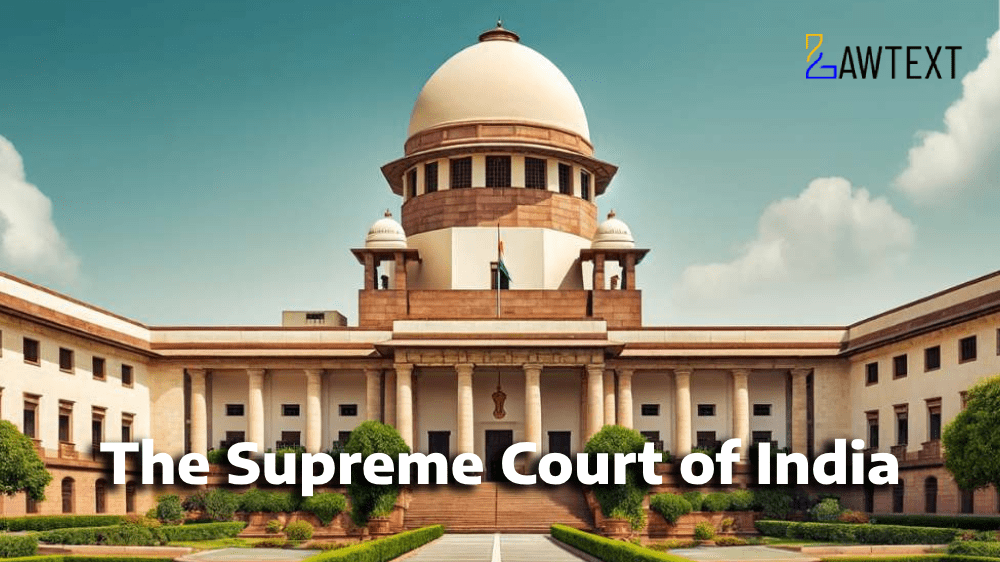
Supreme Court Allows Admission of Students in MBBS Course Despite Non-Compliance with MCI Regulations. Court exercised its power under Article 142 to prevent injustice to students admitted under State Rules, despite their non-compliance with MCI Regulations.

  • 2
Judgement Image
Font size:
Print

Case Note & Summary

The dispute arose from the admission of appellants, who belonged to Scheduled Castes, Scheduled Tribes, and Socially and Educationally Backward Classes, to the MBBS course at Pramukhswami Medical College, Karamsad. They challenged the Gujarat High Court's decision that upheld the Medical Council of India's (MCI) directive to discharge them due to their failure to secure the required marks in the common entrance test. The MCI Regulations mandated that candidates must obtain a minimum of 40% marks in Physics, Chemistry, and Biology in both the qualifying examination and the competitive entrance examination. The appellants had met the qualifying examination criteria but fell short in the entrance test. The High Court dismissed their writ petition, stating that the MCI's directions were lawful as the appellants did not meet the eligibility criteria. The appellants argued that they were validly admitted under the State Rules, which did not require the same competitive examination marks. The MCI contended that its regulations were statutory and binding, thus prevailing over the State Rules. The Court noted that the admissions were granted due to the fault of the rule-making authority, which failed to align the State Rules with MCI Regulations. Ultimately, the Supreme Court decided to exercise its power under Article 142 to allow the appellants to continue their studies, emphasizing that they should not be penalized for the mistakes of the authorities. The Court's decision was not to be treated as a precedent, and the appeal was disposed of without costs.

Headnote

A) Constitutional Law - Article 142 - Power to do complete justice - The Court exercised its power under Article 142 of the Constitution to allow the admissions of the appellants to the MBBS course despite their non-compliance with MCI Regulations, attributing the fault to the rule-making authority for not aligning State Rules with MCI Regulations. The Court emphasized that the appellants should not suffer due to the mistakes of the rule-making authority (Paras 12-14).

Subscribe to unlock Headnote Subscribe Now

Issue of Consideration

Whether the appellants were eligible for admission to the MBBS course despite not meeting the MCI Regulations due to the fault of the rule-making authority.

Subscribe to unlock Issue of Consideration Subscribe Now

Final Decision

The Supreme Court allowed the admissions of the appellants to the MBBS course for the academic year 2008-2009, exercising its power under Article 142 to prevent injustice, despite the appellants not meeting the MCI Regulations. The Court directed that their admissions would not be disturbed, emphasizing that this decision should not be treated as a precedent.

Law Points

  • Eligibility criteria
  • Medical Council of India Regulations
  • State Rules
  • Article 142 of the Constitution
  • Admission process
  • Scheduled Castes and Scheduled Tribes

Subscribe to unlock Law Points Subscribe Now

Case Details

2011 LawText (SC) (02) 60

Civil Appeal No. 1925 of 2011

2011-02-18

A. K. Patnaik, R.V. Raveendran

K.V. Vishwanathan, Amrendra Sharan, Maulik Nanavati

Chowdhury Navin Hemabhai & Ors.

The State of Gujarat & Ors.

Subscribe to unlock Case Details (Citation, Judge, Date & more) Subscribe Now

Nature of Litigation

Challenge to the High Court's dismissal of a writ petition regarding admission to MBBS course.

Remedy Sought

Appellants sought to quash the MCI's communication discharging them from the MBBS course.

Filing Reason

Discharge from MBBS course due to non-compliance with MCI Regulations.

Previous Decisions

High Court upheld MCI's directive, stating no illegality in discharging the appellants.

Issues

Whether the appellants were eligible for admission to the MBBS course despite not meeting MCI Regulations. Whether the fault of the rule-making authority should affect the admissions of the appellants.

Submissions/Arguments

Appellants argued they were validly admitted under State Rules and should not suffer for the rule-making authority's mistakes. MCI contended that its regulations are statutory and binding, and admissions cannot violate these regulations.

Ratio Decidendi

The Court held that the fault of the rule-making authority in not aligning State Rules with MCI Regulations should not penalize the appellants, and it exercised its power under Article 142 to ensure complete justice.

Judgment Excerpts

The appellants belong to Scheduled Castes, Scheduled Tribes and Socially and Educationally Backward Classes. The High Court held that Clause 5.5 (ii) of the MCI Regulations specifically stipulated that candidates must have obtained a minimum of 40% marks. This is a clear case where the admissions of the seven appellants took place due to the fault of the rule-making authority.

Procedural History

The appellants filed a writ petition in the High Court challenging the MCI's directive after being discharged from the MBBS course. The High Court dismissed the petition, leading to the appeal in the Supreme Court.

Acts & Sections

  • Indian Medical Council Act, 1956:
  • Gujarat Professional Medical Educational Colleges or Institutions (Regulation of Admission and Fixation of Fees) Act, 2007: Section 20(1), Section 20(4)
Subscribe to unlock full Legal Analysis Subscribe Now
Related Judgement
Supreme Court Supreme Court Allows Cross-Appeals Against Remand Order in Arbitration Matter — Power of Appellate Court Under Section 37 of Arbitration Act Examined. The Court held that an appellate court under Section 37 cannot remand a Section 34 petition for f...
Related Judgement
Supreme Court Supreme Court Upholds Conviction of Police Officers for Murder and Conspiracy — Police Action Found Unjustified.