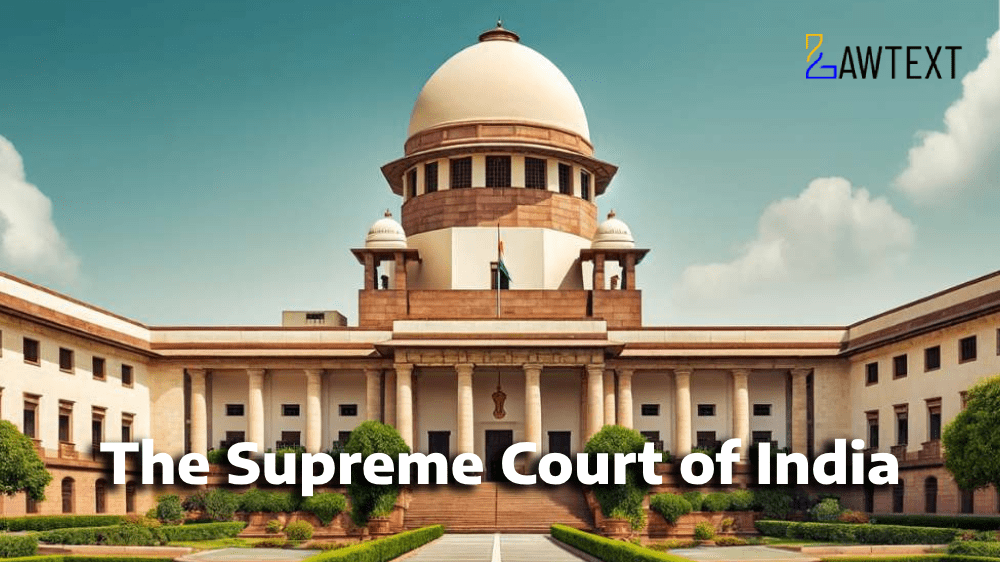
Supreme Court Addresses Pendency of Criminal Cases and Access to Justice — Court emphasizes the need for timely resolution of cases to uphold the rule of law.

  • 0
Judgement Image
Font size:
Print

Case Note & Summary

The Supreme Court of India dealt with a significant issue regarding the prolonged pendency of criminal cases due to stay orders issued by High Courts. The appeals arose from a batch of interlocutory orders passed by the Allahabad High Court, which had stayed investigations and trials for an extended period, leading to concerns about the administration of justice. The Court noted that the stay orders had resulted in cases remaining unresolved for years, with some pending for over two decades. The Court highlighted the alarming statistics presented by the Amicus Curiae regarding the number of cases pending across various High Courts, particularly in Allahabad and Kolkata, which accounted for a substantial percentage of the total pendency. The Court expressed its concern over the impact of such delays on the rule of law and citizens' access to justice, emphasizing that the right to a timely trial is a fundamental aspect of justice. The Court directed the High Courts to exercise their powers judiciously and to ensure that cases where stay orders were granted should be resolved promptly. Furthermore, the Court called upon the Law Commission to investigate the issue of judicial delays and to recommend measures for improving the justice delivery system. The Court's decision underscored the necessity of maintaining public confidence in the judiciary by ensuring timely justice and addressing the backlog of cases effectively.

Headnote

A) Constitutional Law - Right to Access Justice - Prolonged Stay of Proceedings - Article 21 of the Constitution of India - The Court emphasized that the right to access justice is fundamental and must be upheld, particularly in cases where investigations and trials are unduly delayed due to stay orders. The Court directed that such stay orders should be disposed of expeditiously, preferably within six months, to prevent violation of citizens' rights (Paras 60-61).

Subscribe to unlock Headnote Subscribe Now

Issue of Consideration

Whether the prolonged stay of criminal investigations and trials by High Courts violates the right to access justice under Article 21 of the Constitution.

Subscribe to unlock Issue of Consideration Subscribe Now

Final Decision

The Supreme Court directed that High Courts should dispose of stay orders expeditiously, preferably within six months, to uphold the right to access justice. The Court also requested the Law Commission to investigate the issue of judicial delays and recommend measures for improving the justice delivery system.

Law Points

  • Right to access justice
  • Delay in judicial proceedings
  • Stay orders
  • Article 21 of the Constitution
  • Code of Criminal Procedure
  • 1973
  • Article 226 of the Constitution
Subscribe to unlock Law Points Subscribe Now

Case Details

2012 LawText (SC) (02) 174

Criminal Appeal Nos. 254-262 of 2012 (@ SLP(Crl.) Nos. 1581-1598/2009)

2012-08-26

Ganguly, J.

Gopal Subramanium

Imtiyaz Ahmad

State of Uttar Pradesh & Ors.

Subscribe to unlock Case Details (Citation, Judge, Date & more) Subscribe Now

Nature of Litigation

Criminal appeals concerning the prolonged stay of investigations and trials by High Courts.

Remedy Sought

Appellant sought to challenge the stay orders issued by the High Court.

Filing Reason

The stay orders had led to significant delays in the investigation and trial of criminal cases.

Previous Decisions

The High Court's stay orders had been in effect for several years, leading to a backlog of cases.

Issues

Whether the prolonged stay of criminal investigations and trials violates the right to access justice under Article 21. What measures can be taken to expedite the resolution of cases pending due to stay orders?

Submissions/Arguments

The appellant argued that the prolonged stay orders violate the right to a timely trial. The respondent acknowledged the importance of access to justice and the need for measures to reduce delays.

Ratio Decidendi

The right to access justice is fundamental and must be upheld, particularly in cases where investigations and trials are unduly delayed due to stay orders. The Court emphasized the need for timely resolution of cases to maintain public confidence in the judiciary.

Judgment Excerpts

The right to access justice is fundamental and must be upheld. High Court should make it a point of finally disposing of such proceedings as early as possible but preferably within six months from the date the stay order is issued. This Court gives the aforesaid guidelines for sustaining common man’s faith in the rule of law and the justice delivery system.

Procedural History

The appeals were filed against interlocutory orders of the Allahabad High Court which had stayed investigations and trials in criminal cases for several years.

Acts & Sections

  • Code of Criminal Procedure, 1973: Section 482
  • Constitution of India: Article 21, Article 226
Subscribe to unlock full Legal Analysis Subscribe Now
Related Judgement
High Court High Court of Karnataka Allows Appeal Against Rejection of Plaint in Property Dispute — Suit Not Barred by Limitation or Res Judicata. The court held that the question of limitation is a mixed question of law and fact and cannot be decided at the s...
Related Judgement
Supreme Court Supreme Court Declares Marriage Invalid Due to Absence of Requisite Ceremonies Under Section 7 of Hindu Marriage Act, 1955. Parties Obtained Marriage Certificates Without Performing Saptapadi or Other Rites, Rendering Certificates Null and Void.