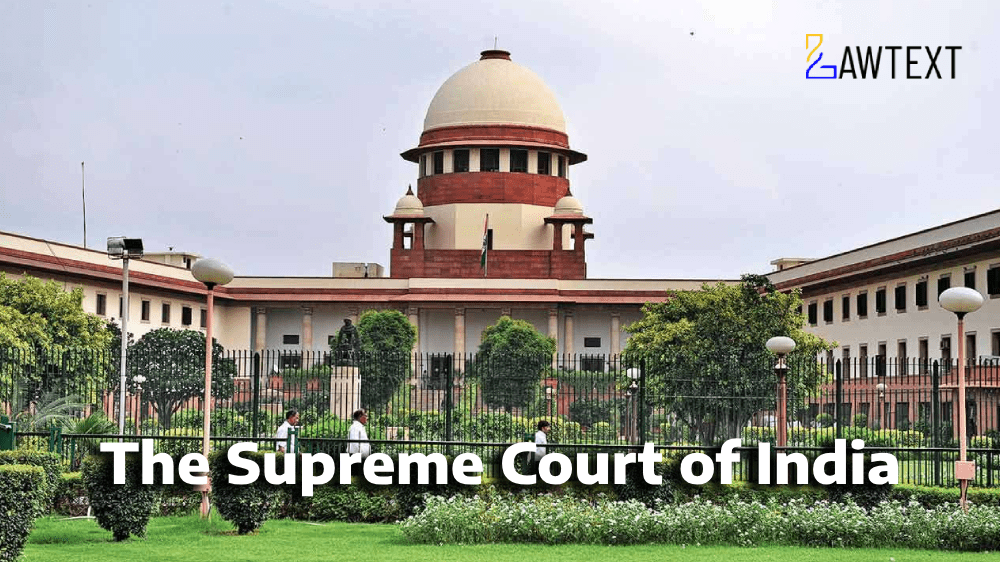
Supreme Court Dismisses Appeal Against Quashing of Criminal Proceedings Due to Civil Settlement. High Court's Quashing of Proceedings Upheld as Settlement of Civil Liability Justified Quashing Under Section 482 Cr.P.C.

In Favour of Prosecution
  • 0
Judgement Image
Font size:
Print

Case Note & Summary

The case involved an appeal by the Central Bureau of Investigation (CBI) against an order of the High Court of Bombay that quashed criminal proceedings against respondents Narendra Lal Jain and Ramanlal Lalchand Jain. The proceedings stemmed from two FIRs registered in 1993, alleging conspiracy and cheating under the Indian Penal Code and the Prevention of Corruption Act. The respondents had previously settled their civil liabilities with the Bank of Maharashtra through consent decrees, which the High Court considered in its decision. The CBI argued that the High Court erred in quashing the proceedings solely based on the civil settlement, asserting that the offences were serious and non-compoundable. The respondents contended that the High Court correctly applied precedents allowing for quashing under Section 482 Cr.P.C. despite the non-compoundable nature of the offences. The Supreme Court, after reviewing the arguments and relevant case law, upheld the High Court's decision, emphasizing that the settlement of civil liability justified the quashing of criminal proceedings, particularly in light of the potential for oppressive prosecution. The appeal was dismissed, affirming the High Court's order.

Headnote

A) Criminal Procedure - Quashing of Proceedings - Justification for Quashing - Code of Criminal Procedure, 1973, Section 482 - The High Court quashed the criminal proceedings on the basis of a civil settlement between the parties, which the appellant contended was insufficient to terminate the criminal case. The court held that the High Court's exercise of power under Section 482 was justified given the settlement of civil liability and the nature of the offences involved (Paras 10-12).

Subscribe to unlock Headnote Subscribe Now

Issue of Consideration

Whether the High Court was justified in quashing the criminal proceedings against the accused-respondents based on the settlement of civil liability.

Subscribe to unlock Issue of Consideration Subscribe Now

Final Decision

The Supreme Court dismissed the appeal, upholding the High Court's order quashing the criminal proceedings against the respondents based on the settlement of civil liability.

Law Points

  • Quashing of proceedings
  • Section 482 Cr.P.C.
  • consent decree
  • non-compoundable offences
  • civil liability settlement
Subscribe to unlock Law Points Subscribe Now

Case Details

2014 LawText (SC) (02) 138

Criminal Appeal No. 517 of 2014

2014-02-28

Ranjan Gogoi, P. Sathasivam, N.V. Ramana

P.P. Malhotra, Sushil Karanjkar

Central Bureau of Investigation (CBI)

Narendra Lal Jain, Jayantilal L. Shah, Ramanlal Lalchand Jain

Subscribe to unlock Case Details (Citation, Judge, Date & more) Subscribe Now

Nature of Litigation

Criminal appeal against quashing of proceedings

Remedy Sought

CBI sought to challenge the quashing of criminal proceedings

Filing Reason

High Court quashed proceedings based on civil settlement

Previous Decisions

High Court upheld the respondents' challenge to the Trial Court's refusal to discharge

Issues

Whether the High Court was justified in quashing the criminal proceedings based on civil settlement Whether the nature of the offences justified the continuation of criminal proceedings

Submissions/Arguments

CBI argued that civil settlement cannot justify quashing criminal proceedings Respondents contended that the High Court correctly applied precedents allowing for quashing

Ratio Decidendi

The High Court's power under Section 482 Cr.P.C. allows for quashing of proceedings when civil liability is settled, even if the offences are serious and non-compoundable.

Judgment Excerpts

The High Court quashed the criminal proceeding registered against the accused-respondents only on the ground that the civil liability of the respondents had been settled by the consent terms recorded in the decree passed in the suits. We do not see how such exercise of power can be faulted or held to be erroneous. The observation in Gian Singh (supra) (para 61) will not be attracted in the present case in view of the offences alleged i.e. under Sections 420/120B IPC.

Procedural History

The respondents moved the High Court under Section 482 Cr.P.C. challenging the Trial Court's refusal to discharge them. The High Court quashed the proceedings, leading to the CBI's appeal to the Supreme Court.

Acts & Sections

  • Code of Criminal Procedure, 1973: 482
  • Indian Penal Code: 120-B, 420
  • Prevention of Corruption Act, 1947: 5(2), 5(1)(d)
  • Prevention of Corruption Act, 1988: 13(2), 13(1)(d)
Subscribe to unlock full Legal Analysis Subscribe Now
Related Judgement
Supreme Court Supreme Court Dismisses Appeal on VAT Refund Adjustment Timelines — Department Must Follow Statutory Timelines. The court affirmed that the adjustment of refund amounts against dues is impermissible if the statutory timeline for processing refunds ...
Related Judgement
Supreme Court Supreme Court Modifies Sentence in Food Adulteration Case — Reduces Custodial Sentence to Period Already Understood. The court found no procedural violation of Section 16-A of the Prevention of Food Adulteration Act, 1954, as no prejudice was shown...