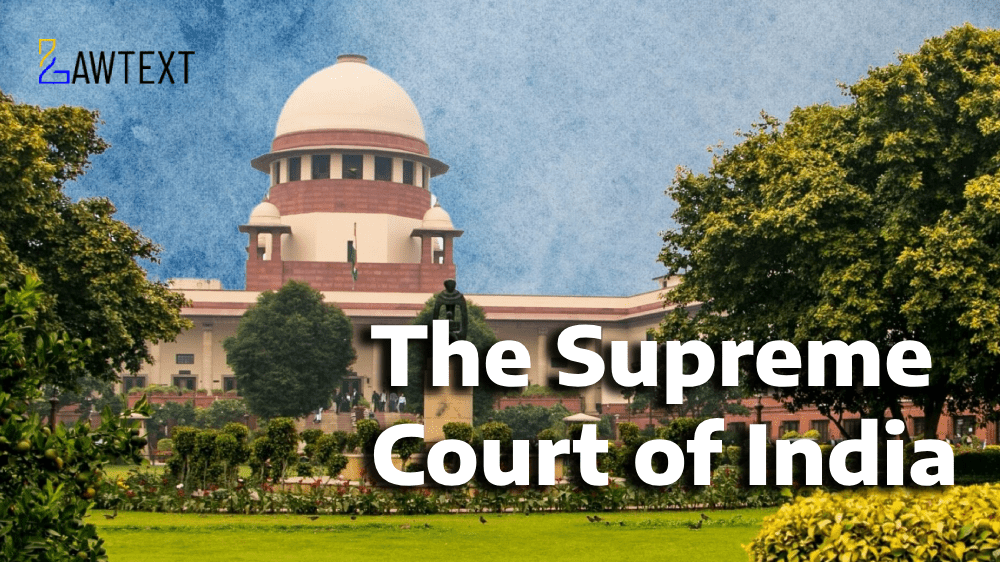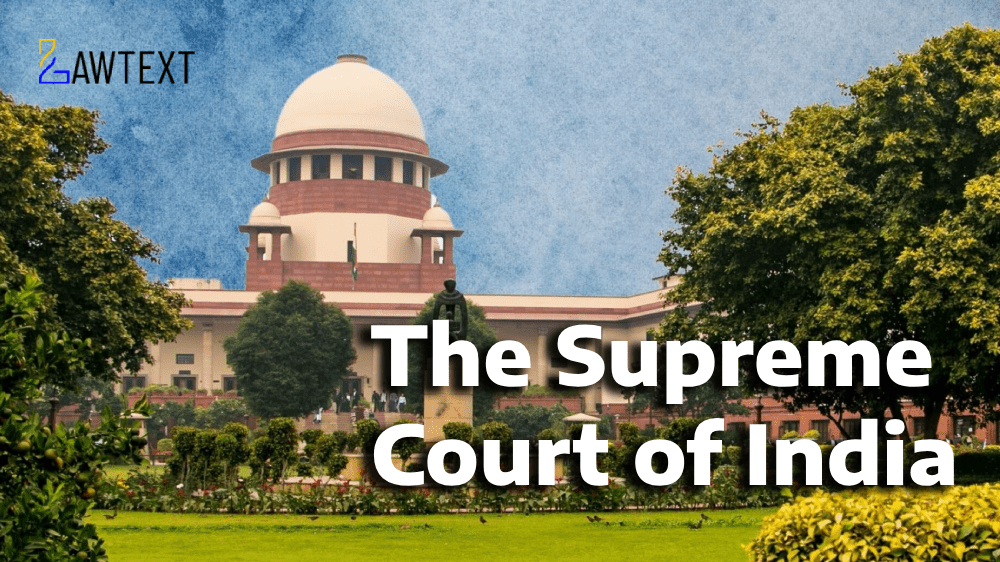
Supreme Court Partly Allows Appeal Against Remission Conditions Imposed on Convict. The court found the condition of behaving decently to be vague and arbitrary, violating Article 14 of the Constitution.

In Favour of Accused
  • 727
Judgement Image
Font size:
Print

Case Note & Summary

The case involved an appeal by the appellant against the conditions imposed by the Gujarat Government while granting remission of his life sentence. The appellant had been convicted under Section 302 read with Sections 147 and 148 of the Indian Penal Code, 1860, and sentenced to life imprisonment on February 18, 2008. The appeal arose from a High Court order rejecting the appellant's application for parole. The Supreme Court granted leave and considered the legality of the conditions imposed during remission. The appellant challenged two specific conditions: one requiring him to behave decently for two years and another allowing for automatic cancellation of remission upon any cognizable offence. The appellant's counsel argued that the conditions were vague and arbitrary, violating Articles 14 and 21 of the Constitution. The State's counsel contended that the conditions were lawful and necessary for public interest. The court analyzed the provisions of Section 432 of the CrPC, emphasizing that remission is discretionary and must be exercised reasonably. It found the first condition regarding decent behavior to be vague and arbitrary, thus struck it down. The court clarified that the second condition should not lead to automatic cancellation of remission without considering the nature of the alleged breach. The court concluded that the principles of natural justice must be followed before revoking remission. The appeal was partly allowed, with the first condition being struck down and the second condition clarified.

Headnote

A) Criminal Procedure - Remission of Sentence - Conditions Imposed - Section 432 Code of Criminal Procedure, 1973 - The court held that the condition requiring the convict to behave decently is vague and arbitrary, violating Article 14 of the Constitution. Such a condition cannot be sustained as it defeats the purpose of remission (Paras 13-14).

B) Criminal Procedure - Automatic Cancellation of Remission - Section 432 Code of Criminal Procedure, 1973 - The court clarified that registration of a cognizable offence against the convict does not automatically lead to cancellation of remission. The appropriate Government must consider the nature of the breach before taking action (Paras 16-17).

Subscribe to unlock Headnote Subscribe Now

Issue of Consideration

Legality of conditions imposed while remitting the life sentence of the appellant under Section 432 of the Code of Criminal Procedure, 1973.

Subscribe to unlock Issue of Consideration Subscribe Now

Final Decision

The court struck down the first condition regarding decent behavior as arbitrary and vague, clarified the second condition regarding automatic cancellation of remission, and partly allowed the appeal.

Law Points

  • remission of sentence
  • conditions for remission
  • Article 14
  • Article 21
  • natural justice
  • discretion of government
Subscribe to unlock Law Points Subscribe Now

Case Details

2024 LawText (SC) (10) 217

Criminal Appeal No.4307 of 2024

2024-10-21

Abhay S. Oka, Augustine George Masih

Rauf Rahim, Swati Ghildiyal

Mafabhai Motibhai Sagar

State of Gujarat & Ors.

Subscribe to unlock Case Details (Citation, Judge, Date & more) Subscribe Now

Nature of Litigation

Appeal against conditions imposed on remission of life sentence.

Remedy Sought

The appellant sought to challenge the conditions imposed on his remission.

Filing Reason

The conditions imposed by the State Government were deemed arbitrary and vague.

Previous Decisions

The High Court of Gujarat rejected the appellant's application for parole.

Issues

Legality of conditions imposed during remission Implications of automatic cancellation of remission

Submissions/Arguments

The conditions imposed are vague and violate constitutional rights. The State has the authority to impose conditions for remission.

Ratio Decidendi

Conditions imposed for remission must be reasonable and not arbitrary, and the principles of natural justice must be followed before revoking remission.

Judgment Excerpts

The condition requiring the convict to behave decently is vague and arbitrary, violating Article 14 of the Constitution. Registration of a cognizable offence against the convict does not automatically lead to cancellation of remission.

Procedural History

The appellant was convicted and sentenced to life imprisonment in 2008. The appeal arose from a High Court order rejecting his application for parole, leading to a challenge against the conditions imposed during remission.

Acts & Sections

  • Code of Criminal Procedure, 1973: Section 432
  • Bharatiya Nagarik Suraksha Sanhita, 2023: Section 473
  • Indian Penal Code, 1860: Section 302, Section 147, Section 148
Subscribe to unlock full Legal Analysis Subscribe Now
Related Judgement
Supreme Court Supreme Court Quashes Dismissal of Army Personnel in Recruitment Fraud Case Due to Lack of Evidence on Category and Certificate Production. The court held that dismissal for fraudulent means under Unit Headquarters Quota requires proof of actual prod...
Related Judgement
High Court High Court of Bombay at Goa Allows Appeal in Land Acquisition Case — Compensation Enhanced for Land Acquired for Road Construction. Land Acquired for 4-Lane Road Held to Have Potential Value Despite Being in Road Widening Area, Entitling Appellant ...